
Delphinium: Types, How to Grow, and How to Take Care of Delphiniums
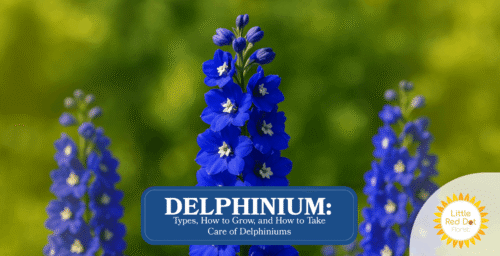
Elegant and eye-catching, delphiniums are among the most striking flowers in any garden or bouquet. With tall, graceful spikes of blooms in shades of blue, purple, pink, and white, these flowers bring a sense of height and grandeur wherever they grow.
Belonging to the buttercup family (Ranunculaceae), delphiniums are known for their signature spurred petals — a shape that resembles the back of a dolphin, which inspired their name (delphis in Greek).
At Little Red Dot Florist, we love delphiniums for their romantic, regal presence. Whether used in floral arrangements or garden displays, they add elegance, structure, and timeless charm. The diagram below presents the parts of a delphinium plant.
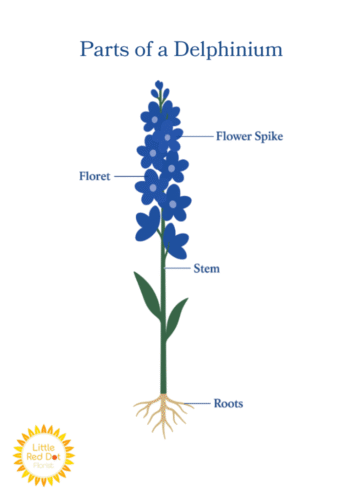
Here’s everything you need to know about the types, how to grow, and how to take care of delphiniums.
Types of Delphiniums
There are over 300 species of delphiniums, though most garden varieties are hybrids bred for colour, height, and bloom size. Below are some of the most popular and reliable types:
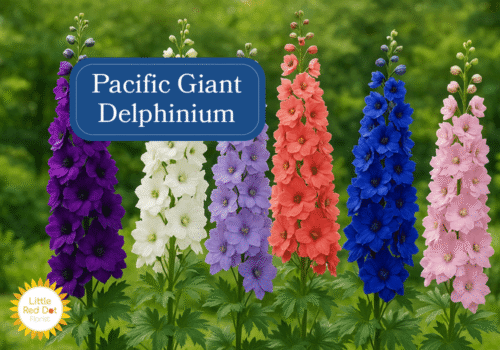
1. Pacific Giant Delphiniums
Known for their tall, stately spikes that can reach up to two metres, these are classic English-garden favourites.
Colours: Blue, purple, pink, lavender, white
Blooming Season: Early to mid-summer
Best For: Borders, cutting gardens, and formal displays
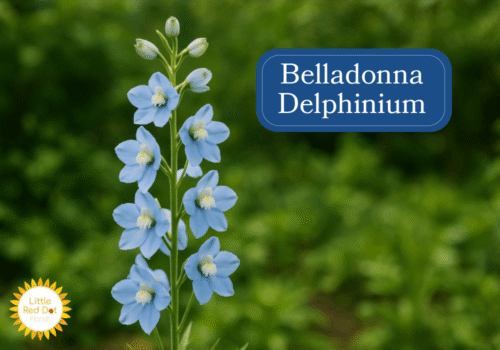
2. Belladonna Delphiniums
A slightly more delicate hybrid with airy, loosely spaced flowers. Belladonnas are compact and ideal for smaller gardens or containers.
Colours: Sky blue, violet, white
Blooming Season: Late spring to autumn
Best For: Garden beds and cottage-style arrangements
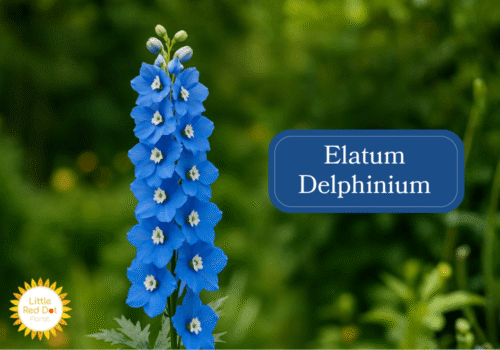
3. Elatum Delphiniums
Also known as “tall delphiniums,” these hybrids produce dense spikes of large flowers in vibrant hues.
Colours: Deep indigo, violet, pink, white, and bicolours
Blooming Season: Early summer to mid-autumn
Best For: Large landscapes and statement pieces
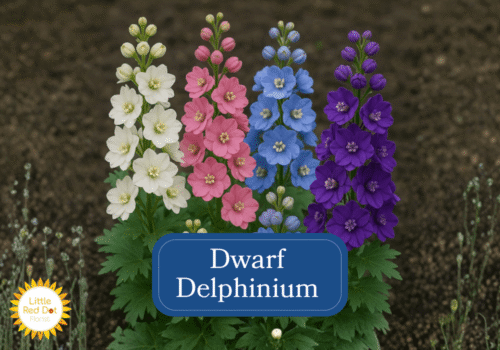
4. Dwarf Delphiniums
Shorter varieties (about 30–60 cm) that offer the same beauty on a smaller scale. Perfect for pots and compact spaces.
Colours: Blue, mauve, white
Blooming Season: Summer
Best For: Containers and balconies
How to Grow Delphiniums
Delphiniums may look delicate, but they’re hardy perennials with the right care. They thrive in temperate climates and can adapt to warm regions with some adjustments.
Light Requirements
Delphiniums need full sun to grow strong stems and vibrant blooms. In hot tropical climates like Singapore, partial shade during the afternoon helps prevent heat stress.
Soil
They prefer fertile, well-draining soil that’s rich in organic matter. Add compost or aged manure before planting to boost nutrients.
Ideal pH: Slightly alkaline (around 7.0–7.5).
Watering
Keep soil consistently moist but not soggy. Delphiniums dislike dry roots but are also prone to rot in standing water. Water deeply once or twice a week, depending on humidity and temperature.
Planting Tips
- When to Plant: In temperate climates, plant in spring or autumn. In tropical areas, start from seedlings or potted plants during cooler months.
- Spacing: Leave at least 40–60 cm between plants for proper airflow.
- Staking: Tall delphiniums need early support — insert stakes while plants are young to prevent bending as they grow.
Temperature and Climate
Delphiniums thrive in cool to mild conditions (10–25°C). They can grow in tropical regions if protected from harsh midday sun and provided with consistent watering.
How to Take Care of Delphiniums
Once established, delphiniums require steady care to maintain their height, colour, and health throughout the season.
Fertilising
Feed delphiniums every 4–6 weeks during their growing season using a balanced fertiliser (10-10-10) or a flower-boosting blend rich in potassium and phosphorus. Avoid high-nitrogen fertilisers, as these cause weak stems.
Pruning and Deadheading
- Remove faded blooms promptly to encourage a second flush of flowers.
- Cut the plant down to the base after flowering to promote fresh growth.
- Thin crowded stems early in the season to improve air circulation.
Mulching
Apply organic mulch around the base to retain moisture and keep roots cool. This is especially important in warmer climates.
Pest and Disease Control
Delphiniums are susceptible to aphids, slugs, and powdery mildew.
- Prevention: Maintain airflow, avoid water splashing on leaves, and use organic deterrents like neem oil.
- Treatment: Remove affected leaves immediately to prevent spread.
For Cut Flowers
Delphiniums make stunning cut flowers with their tall, dramatic spikes.
- Cut early in the morning when blooms are half-open.
- Trim stems diagonally and place in deep, clean water.
- Change water every two days for maximum freshness (lasting up to one week).
Propagating Delphiniums
You can propagate delphiniums by dividing root clumps every few years or by taking cuttings in spring. Division helps maintain healthy growth and prevent overcrowding.
If growing from seeds, note that hybrids may not always produce true-to-type plants — division or cuttings ensure consistency in colour and form.
Symbolism of Delphiniums
Delphiniums carry rich symbolism across cultures. They represent positivity, openness, and dignity, as well as a joyful heart. Their tall stature and upward growth are often seen as a symbol of aspiration and reaching for one’s goals.
Different colours carry unique meanings:
- Blue Delphiniums: Serenity and grace
- Purple Delphiniums: Royalty and success
- Pink Delphiniums: Youth and love
- White Delphiniums: Clarity and renewal
In Victorian flower language, delphiniums were often gifted to express a sense of light-heartedness and encouragement.
In Summary
Tall, elegant, and radiant, delphiniums bring both beauty and symbolism to any space. With their vivid hues and stately form, they create a sense of grandeur in gardens and bouquets alike.
While they require a bit of care and attention, their stunning blooms are well worth the effort.
At Little Red Dot Florist, we love using delphiniums in our floral designs for their vertical grace and rich tones. Whether paired with roses, lilies, or peonies, they add sophistication and a touch of poetry to every arrangement.
Delphiniums remind us that beauty grows best when it reaches toward the light — tall, strong, and full of colour.