 Free Same Day Delivery Islandwide | Order by 5PM for Today’s Delivery | 800+ 5-Star Reviews
Rose: Types and Symbolism
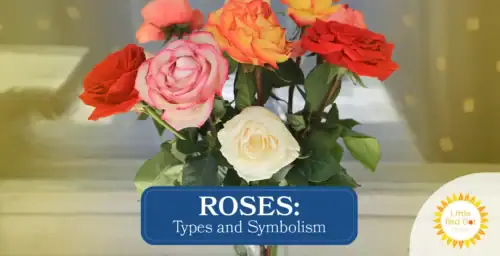
Roses are renowned for their intricate and elegant flower shapes. Each rose flower has multiple layers of petals arranged in a spiral pattern around a central core of reproductive organs. The petals are broad and rounded or more pointed and cupped, creating various forms, from the classic tightly packed blooms of hybrid tea roses to the open, flat blooms of floribundas and old garden roses. Each rose flower presents a unique beauty that contributes to its universal appeal.
Roses, which have the botanical name Rosa, belong to the family Rosaceae. The diverse family includes over 300 species and thousands of cultivars, making roses one of the world’s most varied and grown flowering plants. The beauty and versatility of the rose plant have made it a favourite in gardens, bouquets, and various cultural expressions.
The leaves of a rose plant are dark green and glossy, providing a beautiful contrast to the vivid colours of the flowers. They are pinnate, with a serrated edge and an alternating arrangement along the stem. A rose leaf comprises five to nine leaflets, each oval and pointed at the tip.
Roses are hardy plants capable of enduring a range of environmental conditions. They are perennial shrubs, meaning they live for over two years and thrive for decades with proper care. Roses have a moderate growth speed, with new growth emerging in early spring and flowers appearing in late spring to early summer, continuing through the fall.
Modern rose cultivars resist insects such as aphids, spider mites, and Japanese beetles. Regular monitoring and maintenance, such as pruning and using organic insecticides, help manage pest problems and keep the rose plant healthy.
Roses grow moderately and take a fe years to establish themselves. It produces new canes and foliage during its growing season, and it blooms multiple times from late spring to fall with proper care.
The lifespan of a rose plant varies depending on the variety and growing conditions. Well-cared-for shrubs and climbing roses live for 50 years or more. Proper care extends the life of hybrid tea roses, which are shorter-lived. Roses are non-toxic to humans and pets, making them safe to grow in gardens where children and animals are present. However, the thorns on rose stems pose a physical hazard, so care must be taken when handling the plants.
The rose flower holds rich symbolism across various cultures and contexts. It is associated with love and romance. For instance, a red rose bouquet is a universal symbol of deep affection and passion, given on Valentine’s Day and anniversaries. Pink roses convey admiration and gratitude, while yellow roses symbolise friendship and joy. White roses represent purity and new beginnings, making them popular at weddings and other ceremonial occasions.
Roses can symbolise secrecy (sub rosa), endurance, and resilience, reflecting their ability to thrive and bloom repeatedly under diverse conditions. The varied symbolism of the rose flower adds depth to its beauty, making it a powerful emblem in art, literature, and everyday life.
The rose plant is a fascinating and multifaceted flower, celebrated for its aesthetic appeal and rich cultural and symbolic meanings. Nothing is more enchanting and inspiring than roses, whether admired in a garden, presented in a rose bouquet, or appreciated in a rose flower arrangement.
What is a Rose?
A rose is a perennial flowering plant belonging to the genus Rosa, within the family Rosaceae. Roses contain over 300 species and thousands of cultivars, showcasing a wide variety of colours, shapes, and sizes. They are native to the Northern Hemisphere’s temperate regions, including parts of North America, Europe, and Asia. They are known for their iconic, fragrant blooms, which have made them one of the most popular and cherished flowers worldwide.
Roses grow as erect shrubs, climbers, or trailing plants. Their stems are covered with prickles, called thorns, but are not true botanical thorns. The leaves are pinnate, with five to nine leaflets and serrated edges. The flowers come in many forms, ranging from simple, single-petalled varieties to complex, multi-layered blooms. Colours span the spectrum, including red, pink, white, yellow, and orange, with some modern varieties exhibiting more unusual hues, such as purple and blue.
The cultural significance of roses is vast and deeply rooted in human history. They have been symbols of beauty, love, and passion since ancient times, appearing in art, literature, and mythology across many cultures. The ancient Greeks and Romans associated roses with their goddesses of love, Aphrodite and Venus. The rose has been adopted as a symbol by various countries and organisations, such as the United States, which celebrates it as its national flower, and the United Kingdom, where the rose is symbolic of the Tudor dynasty.
Roses have practical applications as well. Rose hips (fruit of the rose plant) are rich in vitamin C and have been used in traditional medicine to treat various ailments. Rose oil, extracted from the petals, is a valuable ingredient in the perfume industry due to its rich and complex fragrance. Rose water, a byproduct of rose oil production, is used in culinary practices in Middle Eastern and Indian cuisines to add a delicate floral flavour to dishes and desserts.
The cultivation of roses, or rosiculture, is a specialised horticultural practice. Gardeners and horticulturists have developed numerous techniques to breed new varieties and maintain the health and vigour of rose plants. It includes selecting desirable traits such as disease resistance, fragrance, and bloom size. Rose gardening involves understanding the plant’s specific needs, such as proper soil conditions, watering practices, and pest management, to ensure these beautiful flowers thrive and continue to enchant people worldwide.
What are the Types of Roses?
The Types of Roses are listed below.
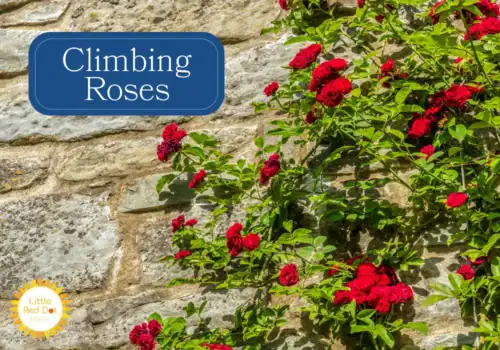
- Climbing Roses: Climbing roses are vigorous growers that reach heights of 10 to 20 feet or more. They have long, arching canes that are trained to grow on trellises, fences, or walls.
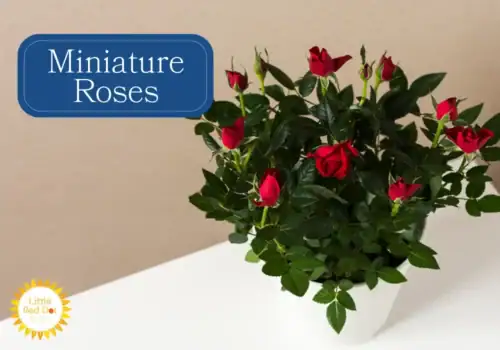
- Miniature Roses: Miniature roses are compact plants that grow no taller than 18 inches. They are perfect for small gardens, containers, and indoor planting.
- Shrub Roses: Shrub roses are known for their hardiness and versatility. They have a bushy growth habit and can range from 5 to 15 feet in height and width.
- Hybrid Tea Roses: Hybrid tea roses are the quintessential rose, known for their elegant, long-stemmed blooms, perfect for cutting and floral arrangements. They have one large bloom per stem and come in various colours.
- Tree Roses: Tree roses (standard roses) are created by grafting a rose bush onto a tall, sturdy stem. It gives them the appearance of a small tree with a dense, rounded canopy of blooms.
- Floribunda Roses: Floribunda roses are known for their prolific blooming habit, producing large clusters of flowers on each stem. They are a cross between hybrid tea roses and polyantha roses, combining their best traits.
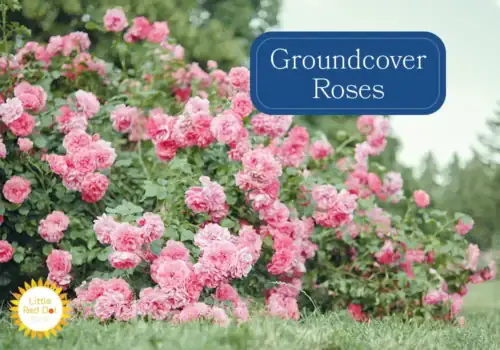
- Groundcover Roses: Groundcover roses have a low, spreading growth habit that makes them excellent for covering large areas of ground. They are hardy and disease-resistant, requiring minimal maintenance.
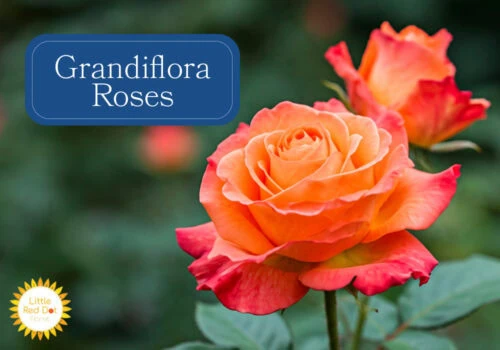
- Grandiflora Roses: Grandiflora roses are a hybrid between hybrid tea and floribunda roses. They combine the large, elegant blooms of hybrid tea roses with the prolific blooming habit of floribundas.
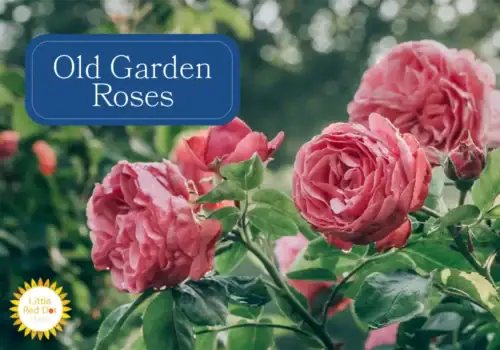
- Old Garden Roses: Old garden roses (heritage or antique roses) are varieties that existed before the introduction of the first modern rose, the hybrid tea, in 1867.
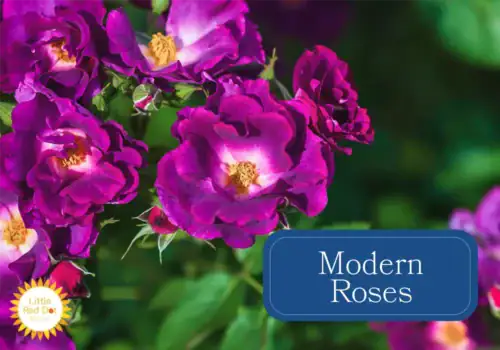
- Modern Roses: Modern roses encompass a broad category that includes all rose varieties developed after 1867. Modern roses have been bred for specific traits such as repeat blooming, disease resistance, and various colours and forms.
1. Climbing Roses
Climbing roses are rose plants characterised by their long, flexible canes that are trained to grow vertically on structures like trellises, fences, and arbours. They do not naturally cling to surfaces but are guided and tethered to support frameworks to achieve this climbing habit.
Climbing roses have robust canes that grow several metres in length. The leaves of climbing roses are pinnate with multiple leaflets, producing a wide array of flower colours and forms, ranging from single to fully double blooms. Many varieties are repeat bloomers, providing flowers from late spring through fall.
Climbing roses are popular in garden design for creating vertical interest and enhancing structures such as pergolas, arches, and walls. They serve as living screens to provide privacy and add a romantic or classical touch to garden spaces. Their ability to cover large areas makes them ideal for beautifying unsightly fences or buildings.
Efforts to conserve climbing roses focus on preserving heirloom varieties and maintaining genetic diversity within rose species. Botanical gardens and rose societies participate in breeding programs and maintain collections to protect these plants from loss due to habitat destruction or disease.
Climbing roses are unique in many cultures, symbolising beauty, love, and elegance. They have been featured in art, literature, and folklore for centuries and are associated with romantic and picturesque settings, enhancing the aesthetic appeal of history. The price of climbing roses varies widely depending on the plant’s variety, age, and size. A young climbing rose plant costs between S$26.88 to S$67.21.
2. Miniature Roses
Miniature roses are small-scale rose plants that grow to a height of 6 to 18 inches. Miniature roses produce perfectly formed despite their diminutive size, fragrant blooms smaller than standard roses’ blooms. They are ideal for container gardening, indoor cultivation, and small garden spaces.
Miniature roses have compact growth habits, and smaller leaves and flowers than standard rose varieties. The blooms measure about 1 to 2 inches in diameter and come in various colours, including red, pink, yellow, white, and orange. These roses are known for their hardiness and ability to thrive in multiple climates, given proper care.
Miniature roses are versatile plants suitable for container gardening, indoor plants, or small garden spaces. They are perfect for creating colourful displays on patios, balconies, or window sills. Miniature roses make excellent gifts and are used in floral arrangements and bonsai art due to their petite size and delicate appearance.
Conservation efforts for miniature roses include preserving heirloom varieties and maintaining genetic diversity. Botanical gardens and rose societies work to protect these plants from threats like disease and habitat loss. They use breeding programs to develop new, beautiful, resilient varieties.
Miniature roses symbolise beauty, love, and appreciation like their larger counterparts. They are popular as decorative plants and gifts for special occasions in many cultures. Their small size and charming blooms make them suitable for indoor spaces and intimate garden settings, where they add a touch of elegance and colour. The price of miniature roses ranges from S$10 to S$30 per plant, depending on the variety and size.
3. Shrub Roses
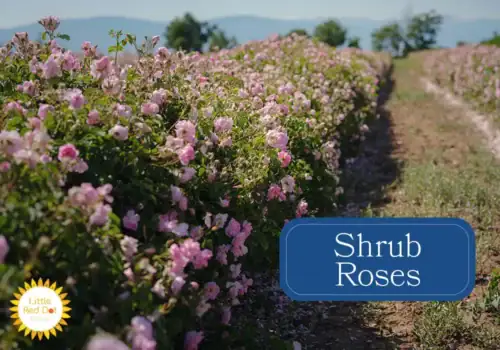
Shrub roses are a diverse group of rose plants characterised by their robust growth habits and ability to thrive in various conditions. Shrub roses include modern and old garden rose varieties, forming bushy, spreading plants that reach heights and widths of several feet. They are known for their hardiness, disease resistance, and ability to produce flowers throughout the growing season.
Shrub roses have a bushy, sprawling growth habit, with thick, woody stems and abundant foliage. The leaves of shrub roses are pinnate with multiple leaflets, and the flowers vary widely in size, shape, and colour, from single blooms to fully double flowers. Shrub roses are repeat bloomers, continuously displaying flowers from late spring to frost. They are known for their fragrance, ranging from light to intensely aromatic.
Shrub roses are highly versatile and are used in landscaping for hedges, borders, and mass plantings. Their dense growth habit makes them excellent for creating natural screens or adding structure to garden beds. They are famous for filling large garden spaces with vibrant colours and fragrances. Shrub roses are grown as standalone specimens or in mixed borders with other perennials and shrubs.
Conservation efforts for shrub roses focus on preserving modern and historical varieties to maintain genetic diversity and protect against disease. Botanical gardens, rose societies, and dedicated gardeners work to conserve heirloom varieties and develop new cultivars that retain the hardiness and beauty of traditional shrub roses. These efforts help ensure that diverse and resilient rose varieties are available for future generations.
Shrub roses have a rich cultural heritage and symbolise love, beauty, and resilience. They have been celebrated in art, literature, and horticulture for centuries, representing themes of romance and natural beauty. Shrub roses are valued for their ability to provide continuous colour and fragrance in gardens, enhancing the aesthetic appeal of formal and informal landscapes. The price of shrub roses can range from S$30 to S$100 per plant, depending on the variety, size, and age.
4. Hybrid Tea Roses
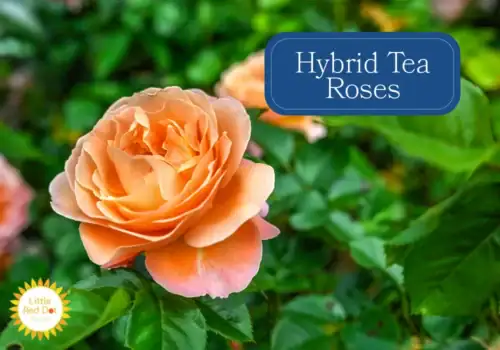
Hybrid tea roses are a popular type of rose known for their large, well-formed blooms and long, sturdy stems. Hybrid tea roses are considered the quintessential modern rose, widely grown for their beauty and fragrance. These roses are ideal for cutting and are a staple in floral arrangements and bouquets.
Hybrid tea roses grow as upright bushes, reaching 3 to 6 feet. The blooms are borne singly at the end of long stems, making them perfect for cutting. The flowers are large, 4 to 5 inches in diameter, and come in various colours, including reds, pinks, yellows, and whites. Hybrid tea roses are also prized for their robust and pleasant fragrance.
Hybrid tea roses are used for ornamental purposes in garden settings and for cut flowers. Their striking blooms and elegant form make them excellent for formal garden beds, borders, and rose gardens. They are valued for creating beautiful bouquets and arrangements in the floral industry. They are grown in containers for patio or balcony displays.
Conservation efforts for hybrid tea roses include preserving heirloom varieties and breeding new cultivars that combine beauty with disease resistance and hardiness. Botanical gardens, rose societies, and horticultural institutions often maintain collections of hybrid tea roses and participate in breeding programs to ensure these iconic flowers’ continued availability and diversity.
Hybrid tea roses hold a special place in many cultures as symbols of love, beauty, and elegance. They have been popular in gardens and as cut flowers since their development in the late 19th century. Hybrid tea roses are synonymous with the classic image of a rose and continue to be a favourite among gardeners and florists alike, featured in celebrations, romantic gestures, and public displays. The price of hybrid tea roses ranges from S$20 to S$60 per plant, depending on the variety, size, and age.
5. Tree Roses
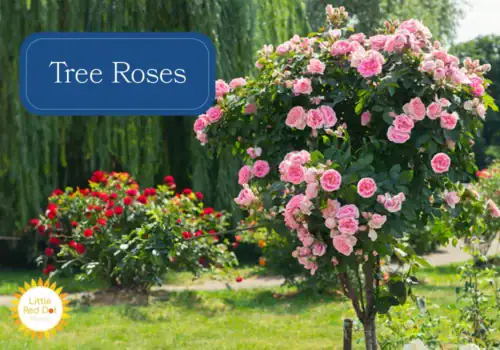
Tree roses (standard roses) are a rose plant created by grafting a rose bush onto a tall stem, resulting in a tree-like appearance. Standard roses feature a straight trunk topped with blooms, combining rose bushes’ beauty with a small tree’s elegance. Tree roses add vertical interest and a formal touch to gardens and landscapes.
Tree roses consist of three parts, such as the rootstock, the trunk, and the grafted rose variety at the top. The rootstock provides the foundation, while the trunk is sturdy, with a straight stem, and supports the rose bush grafted at the top. The crown of the tree rose produces blooms that vary widely in colour, size, and form, depending on the variety grafted. These roses can reach heights of 3 to 6 feet.
Tree roses are used in formal garden settings, providing a striking focal point and adding vertical interest to garden beds, patios, and walkways. They are ideal for creating symmetrical designs and are planted in rows or clusters for a dramatic effect. Tree roses are famous for container gardening, where they are moved and positioned to enhance outdoor living spaces.
Conservation efforts for tree roses focus on maintaining the health and vigour of the rootstock and the grafted rose variety. Botanical gardens and rose societies engage in breeding programs to develop robust and disease-resistant rootstocks, ensuring the longevity and stability of tree roses. Preserving heirloom and rare rose varieties through grafting onto hardy rootstocks is a key conservation aspect.
Tree roses have a rich cultural significance, symbolising elegance and refinement. They have been favoured in formal gardens and historical estates for centuries, representing beauty and sophistication. Tree roses are featured in public gardens, parks, and private landscapes, where they add a touch of grandeur and structure. The price of tree roses can range from S$50 to S$150 or more, depending on the plant’s variety, size, and age.
6. Floribunda Roses
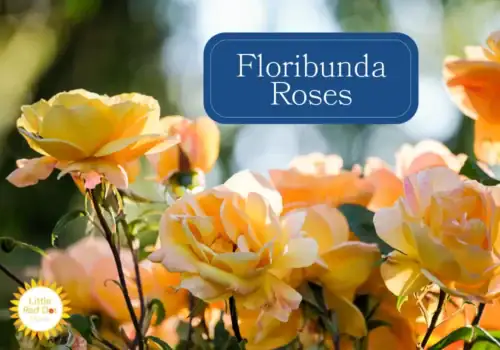
Floribunda roses are a type of rose known for their prolific blooming habit, producing clusters of flowers on each stem. Floribunda roses result from crossbreeding hybrid tea roses with polyantha roses, combining the large blooms of hybrid teas with the cluster-flowering habit and hardiness of polyanthus. They are admired for their vibrant, continuous blooms and versatility in the garden.
Floribunda roses grow as medium-sized, bushy plants, reaching 2 to 4 feet. Their flowers are smaller than flowers of hybrid teas but are borne in large, showy clusters, creating a stunning visual impact. Floribunda roses come in various colours, including reds, pinks, yellows, oranges, and whites. Many varieties have a pleasing fragrance, adding to their appeal.
Floribunda roses are versatile and are used in garden borders, hedges, and mass plantings. Their continuous blooming habit makes them ideal for providing long-lasting colour in the garden from spring through fall. Floribundas are well-suited for container gardening, allowing them to be enjoyed on patios, balconies, and other outdoor living spaces. They are popular for use in floral arrangements and bouquets.
Conservation efforts for floribunda roses focus on preserving diverse varieties and developing new cultivars that are disease-resistant and climate-adaptable. Botanical gardens, rose societies, and horticultural institutions are crucial in maintaining collections and conducting breeding programs. These efforts help ensure the availability of a wide range of floribunda roses for future generations of gardeners.
Floribunda roses hold cultural significance as symbols of beauty and resilience. They are celebrated for their ability to provide abundant blooms and colour throughout the growing season, making them a favourite among gardeners worldwide. Floribundas are used in public and private gardens to create vibrant displays, and their clusters of flowers are associated with joy and celebration. The price of floribunda roses ranges from S$20 to S$50 per plant, depending on the variety, size, and age.
7. Groundcover Roses
Groundcover roses are bred to spread horizontally, creating a dense, low-growing carpet of blooms and foliage. Groundcover roses are valued for covering large areas and suppressing weeds, making them ideal for groundcover in garden beds, slopes, and other expansive areas.
Groundcover roses have a low, spreading growth habit, with arching canes that extend several feet from the base. They produce abundant clusters of small to medium-sized flowers, ranging from white and pink to red and yellow. The foliage is dense and glossy, providing attractive ground coverage even when the plants are not blooming. Varieties are disease-resistant and require minimal maintenance.
Groundcover roses are ideal for covering large garden areas, slopes, and embankments, where their spreading habit helps prevent soil erosion and suppress weeds. They are used in borders, pathways, and mass plantings to display colour and texture continuously. Groundcover roses are low-maintenance and thrive in various soil types, making them a practical and attractive solution for difficult-to-maintain garden spaces.
Conservation efforts for groundcover roses focus on maintaining genetic diversity and developing new varieties that combine aesthetic appeal with hardiness and disease resistance. Botanical gardens, horticultural institutions, and rose societies play a crucial role in preserving existing varieties and conducting breeding programs to introduce new cultivars. These efforts ensure that gardeners access a wide range of robust and beautiful groundcover roses.
Groundcover roses are culturally significant for beautifying and stabilising challenging garden areas. They are associated with practical and sustainable gardening practices, as their dense growth habit reduces the need for chemical weed control and soil stabilisation measures. Groundcover roses add visual interest and colour to landscapes, enhancing the aesthetic of public and private gardens. The price of groundcover roses ranges from S$20 to S$40 per plant, depending on the variety, size, and age.
8. Grandiflora Roses
Grandiflora roses are a type of rose that combines the best qualities of hybrid tea and floribunda roses. Grandiflora roses are known for their large, elegant blooms in clusters. These roses are prized for their height, vigorous growth, and the ability to produce flowers throughout the growing season.
Grandiflora roses grow as tall, robust shrubs, reaching heights of 4 to 6 feet or more. Their flowers are large and well-formed, similar to hybrid tea roses, but produced in clusters like floribundas. Grandiflora roses come in various colours, including reds, pinks, yellows, and whites.
Grandiflora roses are versatile and are used in various garden settings. They are excellent for creating vertical interest in garden beds and borders and are striking focal points in landscape designs. Their tall stature and abundant blooms suit them as background plants in mixed borders or as standalone specimens. Grandiflora roses are also popular for cut flowers, providing long-lasting, elegant blooms for floral arrangements.
Conservation efforts for grandiflora roses focus on preserving diverse varieties and developing new cultivars that are disease-resistant and climate-adaptable. Botanical gardens, rose societies, and horticultural institutions maintain collections and conduct breeding programs to ensure the availability of a wide range of grandiflora roses for future generations of gardeners.
Grandiflora roses hold cultural significance as symbols of beauty and elegance. They are celebrated for their ability to produce large, showy blooms throughout the growing season, making them a favourite among gardeners and florists. Grandiflora roses are featured in formal gardens and public displays, where their impressive size and abundant flowers create a stunning visual impact. The price of grandiflora roses ranges from SGD30 to SGD80 per plant, depending on the variety, size, and age.
9. Old Garden Roses
Old garden roses (heritage or antique roses) are rose varieties that existed before the introduction of the first modern rose, the hybrid tea, in 1867. Antique roses are celebrated for their historical significance, rich fragrances, and unique bloom forms. They have been cultivated for centuries and include categories like Gallica, Damask, Alba, and Bourbon roses.
Old garden roses have a bushy growth habit with robust, thorny canes. Their leaves are matter and dark green, with single, semi-double, or fully double flowers. The blooms have a classic, old-fashioned appearance and come in various colours, such as pinks, reds, and whites. Old garden roses are known for their strong, intoxicating fragrances, a hallmark of these varieties.
Old garden roses are valued in garden settings for their beauty and historical charm. They are used in heritage gardens, cottage gardens, and mixed borders to add a touch of elegance and romance. These roses are popular for their fragrance, making them ideal for planting near walkways, patios, and entrances. Old garden roses are used in creating traditional rose gardens and are prized for their suitability in floral arrangements.
Conservation efforts for old garden roses focus on preserving the genetic diversity and historical varieties cultivated over centuries. Botanical gardens, rose societies, and dedicated horticulturists work to maintain collections of these roses and participate in programs to protect and propagate heirloom varieties. These efforts ensure that the rich heritage of old garden roses is preserved for future generations.
Old garden roses hold deep cultural significance, symbolising history, tradition, and timeless beauty. They have been featured in art, literature, and folklore for centuries and are associated with classic garden designs. Old garden roses are cherished for their rich fragrances and historical connections, adding a sense of nostalgia and romance to gardens and public spaces. The price of old garden roses ranges from S$40 to S$100 per plant, depending on the variety, size, and age.
10. Modern Roses
Modern roses refer to rose varieties developed after 1867, following the introduction of the first hybrid tea rose, ‘La France.’ Modern roses are known for their continuous blooming, diverse colours, and improved disease resistance. They include several classes, such as hybrid teas, floribundas, grandifloras, and miniature roses.
Modern roses exhibit various growth habits, from compact bushes to tall, upright plants. Their flowers vary in size, shape, and colour, with some having single blooms and others producing large clusters. The blossoms of modern roses are fragrant or scentless, and they come in an extensive palette of colours, including vibrant reds, pinks, yellows, oranges, and whites, and unusual shades like purple and green.
Modern roses are versatile and are used extensively in private and public gardens. They are ideal for creating vibrant garden beds, borders, and hedges, as well as for container gardening on patios and balconies. Modern roses are popular in floral arrangements and bouquets due to their long stems and diverse flower forms. Their continuous blooming habit makes them valuable for providing long-lasting colour throughout the growing season.
Conservation efforts for modern roses focus on maintaining genetic diversity and developing new varieties with enhanced traits such as disease resistance, hardiness, and unique colours. Botanical gardens, horticultural institutions, and rose societies work to preserve existing modern rose varieties and engage in breeding programs to introduce new, improved cultivars. These efforts ensure modern roses’ ongoing availability and diversity for gardeners and enthusiasts.
Modern roses hold significant cultural value, symbolising love, beauty, and innovation. They are celebrated for their role in contemporary garden design and are frequently featured in public displays, botanical gardens, and rose shows. Modern roses have become a global symbol of romance and appreciation, commonly used in celebrations such as weddings, anniversaries, and Valentine’s Day. The price of modern roses ranges from S$20 to S$60 per plant, depending on the variety, size, and age.
What are the different colours and meaning of Rose?
The different colours and meaning of Rose are listed below.
- Red Roses: Red roses symbolise love, romance, and passion. They are the classic symbol of deep love and are given on Valentine’s Day and anniversaries.
- Pink Roses: Pink roses means admiration, gratitude, and joy. Light pink roses convey gentleness and grace, while darker pink roses express appreciation and thankfulness.
- Yellow Roses: Yellow roses mean friendship, joy, and new beginnings. Yellow roses symbolise platonic love and are given to friends to celebrate achievements or cheer someone up.
- White Roses: White roses symbolise purity, innocence, and reverence. White roses are used in weddings and funerals, representing new beginnings or a final farewell.
- Orange Roses: Orange roses mean enthusiasm, desire, and excitement. They convey a message of passion and energy and are used to express fascination or admiration.
- Lavender Roses: Lavender roses symbolise enchantment, mystery, and love at first sight. They symbolise a sense of wonder and are associated with the early stages of love.
- Blue Roses: Blue roses mean mystery, the unattainable, and the extraordinary. Blue roses are not found in nature and represent the desire for the unattainable or the unique.
- Black Roses: Black roses symbolise farewell, death, and rebirth. Gothic settings use them to signify the end of a significant phase or the beginning of a new one.
- Peach Roses: Peach roses mean modesty, sincerity, and gratitude. Peach roses are given to show appreciation or celebrate a close friendship.
- Green Roses: Green roses mean renewal, abundance, and harmony. They symbolise growth and balance and are given to wish someone well or to represent new life.
- Coral Roses: Coral roses mean desire and fascination. Coral roses are vibrant and convey a sense of enthusiasm and ardent desire.
When does the growing season occur for Roses?
The growing season occurs for roses in early spring and continues through late fall, depending on the climate. Roses start to wake from their winter dormancy as the days lengthen and temperatures rise in temperate regions. The first flush of blooms appears in late spring, followed by subsequent waves of flowering throughout the summer and into autumn. Roses require regular watering, fertilisation, and maintenance to ensure healthy growth and prolific blooming during the growing period.
Roses have a more extended growing season in warmer climates, such as tropical and subtropical regions, and bloom year-round. However, they experience a period of reduced activity during the hottest part of the year. The growing season is shorter in colder climates, and roses go dormant during winter. Gardeners in these regions provide winter protection, such as mulching or covering, to help their roses survive the cold.
What does a Rose look like?
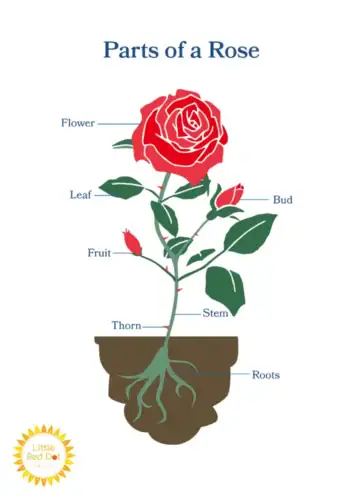
Roses look like incredibly diverse, reflecting the wide range of species and cultivars developed over centuries. The combination of intricate petals, rich colours, glossy leaves, and varying growth habits makes them a focal point in gardens and floral arrangements, admired for their visual and sensory appeal.
The look of a rose is shown in the image below.
What does the Rose Symbolise?
The rose symbolises love, romance, beauty, perfection, secrecy, silence, new beginnings, purity, friendship, and joy. Roses have held symbolic meaning across various cultures and contexts throughout history. Their beauty, fragrance, and diversity of colours have made them potent symbols in art, weddings, endurance, and more. Rose symbolism appears in art, symbolising beauty, love, and passion. The rose meaning accompanies depictions of the Virgin Mary in Renaissance paintings, symbolising her purity and divine love. They symbolise emotions in literary works, such as Shakespeare’s plays, from romantic love to the transient nature of beauty.
Roses are ubiquitous symbols of love, unity, and romance at weddings. The red rose is a traditional emblem of romantic love and is featured in bridal bouquets, boutonnieres, and wedding decor. White roses symbolise purity and new beginnings, making them popular for wedding ceremonies. Roses symbolise endurance and resilience. Rose bushes withstand various environmental conditions and live for many years despite their delicate appearance. The aspect of their nature has led to roses symbolising strength and the ability to endure hardships.
What are the other Flowers with Symbolisms?
The other flowers with symbolism are listed below.
- Tulips: Tulips symbolise deep love and passion, much like red roses. They are given to express romantic feelings and admiration. Tulips symbolise love, passion, and perfect love, similar to red roses.
- Lilies: Lilies represent purity and renewal, particularly white lilies. They are commonly used in weddings and funerals, similar to white roses. Lily symbolises purity, renewal, and refined beauty.
- Carnations: Pink carnations symbolise admiration and gratitude, paralleling the meaning of pink roses. They are used to express appreciation and heartfelt sentiments.
- Orchids: Orchids symbolise rare beauty and strength, akin to the beauty and resilience of roses. They are given to convey luxury and admiration.
- Daisies: Daisies symbolise innocence and purity like white roses. They are associated with new beginnings and are used in various ceremonies and celebrations.
The list of flowers and their meanings showcases the rich plant symbolism associated with different blooms. Each flower in the flower symbolism list carries messages and emotions similar to roses, making them popular for conveying specific sentiments. There is a wide range of symbolic meanings that are attached to these flowers, whether they are used as gifts, at weddings, or for other significant occasions.