 Free Same Day Delivery Islandwide | Order by 5PM for Today’s Delivery | 800+ 5-Star Reviews
Why Flowers Matter in Singapore Culture (From Kampongs to Condos)
Flowers have always played a quiet but meaningful role in Singapore’s culture. Long before air-conditioned malls, online shopping, and high-rise living, flowers were already present in daily life, growing in gardens, used in ceremonies, and shared during important moments.
Even as Singapore has transformed into a modern, fast-paced city, flowers remain deeply woven into how people live, celebrate, and connect. Whether placed in a simple vase at home or arranged into an elegant orchid pot for gifting, flowers continue to express care, respect, and emotion in ways words often cannot.
To understand why flowers still matter today, we need to look back, from kampong gardens to contemporary condo living.
Flowers in Kampong Life: Simple, Practical, and Meaningful
In early kampongs, flowers were not luxury items. They were part of everyday surroundings. Homes were often surrounded by flowering plants grown alongside fruit trees, herbs, and vegetables. Bougainvillea climbed fences, jasmine filled the air with fragrance, and orchids bloomed quietly under shaded areas.
These flowers were grown not to impress, but to bring colour, comfort, and familiarity into daily life. They also played an important role in cultural and spiritual practices, appearing in offerings, prayers, weddings, and farewells. In a slower-paced way of life, tending to flowers was part of caring for the home and the people within it.
A Shared Floral Language Across Cultures
Singapore’s multicultural identity shaped a rich and layered floral tradition. Each community brought its own customs, yet flowers became a shared language understood across cultures.
In Chinese traditions, flowers often symbolised prosperity, longevity, renewal, and harmony, especially during festive periods and ancestral rituals. Malay customs embraced fragrant blooms such as jasmine and pandan, often associated with purity, respect, and grace, particularly in weddings and ceremonies. Indian traditions placed flowers at the centre of religious life, with garlands of marigold, jasmine, and lotus used to honour deities and mark auspicious occasions. Western influences later introduced roses, lilies, and formal bouquets as expressions of romance, sympathy, and celebration.
Despite their differences, all these traditions shared a common belief: flowers communicate intention, emotion, and respect.
Urbanisation Changed Space, Not Meaning
As Singapore urbanised, private gardens became rarer and living spaces grew smaller. Yet flowers did not disappear, they adapted.
Where kampong gardens once flourished, balcony pots and indoor plants took their place. Orchid arrangements became centrepieces in living rooms. Fresh flowers appeared in offices, hotels, shopping centres, and public spaces. In a dense city, flowers offered a connection to nature that people instinctively sought.
They became a way to soften modern interiors, add warmth to concrete spaces, and create moments of calm in a busy environment.
Why Orchids Feel Uniquely Singaporean
Among all flowers, orchids hold a particularly special place in Singapore’s identity. They thrive naturally in the tropical climate and are known for being resilient yet refined, delicate in appearance, but strong and enduring.
Over time, orchids became associated with success, elegance, longevity, and national pride. From everyday homes to corporate spaces and international diplomacy, orchids came to represent the balance Singapore itself embodies: modern yet rooted, ambitious yet graceful.
It is no surprise that orchids remain one of the most popular floral choices in Singapore today.
Flowers in Life’s Milestones
Across generations, flowers have continued to accompany Singaporeans through life’s most meaningful moments. They appear at weddings to symbolise love and new beginnings, at birthdays and anniversaries to express appreciation, and at corporate openings to celebrate growth and success.
Equally, flowers are present during moments of loss. Condolence arrangements offer comfort, respect, and quiet solidarity when words are not enough. In these moments, flowers serve as a shared gesture of care, respectful, thoughtful, and deeply human.
Flowers in Modern Homes, Offices, and Everyday Living
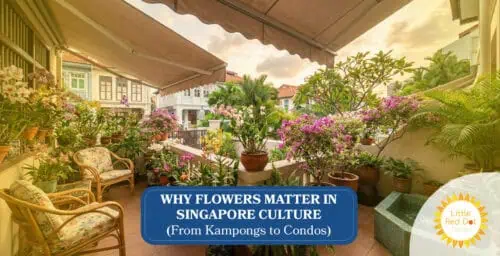
Today’s Singapore homes may look very different from kampong houses, but the desire to bring nature indoors remains unchanged. A single orchid pot can soften a minimalist condo. A small bouquet on a dining table can make everyday meals feel special. Greenery on a work desk can bring balance to long workdays.
Flowers help create emotional warmth in modern living. They remind us to slow down, appreciate beauty, and create welcoming spaces for ourselves and others.
Why Flowers Still Matter Today
In a digital world filled with quick messages and instant gestures, flowers remain intentional. They take thought, effort, and care. They arrive physically, occupy space, and stay with us for days or weeks.
Flowers matter because they create connection. They honour tradition while fitting seamlessly into modern lifestyles. They bring nature into urban environments and mark moments that deserve to be remembered.
From kampong gardens to contemporary condos, flowers have never stopped being part of how Singapore lives.
Continuing a Living Tradition
At Little Red Dot Florist, we see flowers not just as arrangements, but as storytellers. Every bouquet and orchid pot carries echoes of Singapore’s past while fitting beautifully into the present.
When you send or display flowers, you are continuing a tradition that has grown alongside this city, one rooted in care, culture, and connection.
And just like Singapore itself, that tradition continues to bloom.
Why are flowers important in Singapore culture?
Flowers are important in Singapore because they appear across many parts of daily and ceremonial life, from home décor and festive gifting to weddings, religious practices, business openings, and funerals. They help express care, respect, celebration, sympathy, and connection across different cultures.
What flowers are commonly used in Singapore homes?
Orchids, roses, lilies, carnations, chrysanthemums, jasmine, and simple greenery arrangements are commonly used in Singapore homes. Orchids are especially popular because they are elegant, long-lasting, and well suited to Singapore’s warm and humid climate.
How did flower gifting become popular in modern Singapore?
Flower gifting became more popular as Singapore’s lifestyles modernised and people began using bouquets, orchid pots, and floral arrangements to mark personal and professional occasions. Today, flowers are commonly sent for birthdays, anniversaries, graduations, corporate events, housewarmings, festive celebrations, and condolences.
Are orchids the most Singaporean flower?
Orchids are often seen as the flower most closely associated with Singapore because they thrive in the local climate and are strongly connected to the country’s identity. They represent elegance, resilience, refinement, and lasting beauty, making them meaningful for both gifting and home styling.
How do flowers fit into modern Singapore living?
In modern Singapore homes and offices, flowers bring softness, colour, and a sense of calm to urban spaces. Whether placed in a condo, office lobby, dining area, or work desk, flowers help create warmth and connection in environments that can otherwise feel busy, structured, or purely functional.