 Free Same Day Delivery Islandwide | Order by 5PM for Today’s Delivery | 800+ 5-Star Reviews

Condolence Messages in Tamil
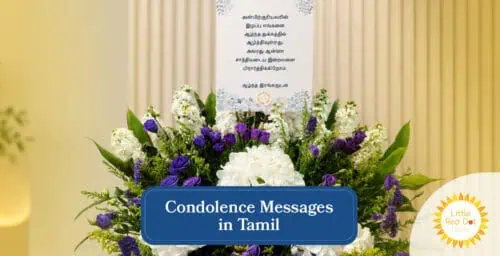
During moments of grief, words can feel difficult to find.
When someone experiences the loss of a loved one, we often want to offer comfort, support, and sympathy, yet expressing these emotions appropriately can feel overwhelming; especially across different cultures and languages.
In Singapore’s multicultural society, funeral customs and condolence practices vary greatly between families and communities. For many Tamil-speaking families, thoughtful words of sympathy carry deep emotional meaning, particularly when paired with respectful funeral flowers or condolence wreaths.
Whether you are sending funeral flowers to a Hindu funeral, offering support to Tamil-speaking friends or colleagues, or simply hoping to express sympathy respectfully, choosing the right condolence message matters.
At Little Red Dot Florist, we understand how important cultural sensitivity is during times of loss. This guide shares commonly used Tamil condolence messages along with their meanings and appropriate contexts.
Why Condolence Messages Matter
Flowers offer visual comfort, but words help make the gesture personal.
A condolence message does not need to be long or elaborate. In fact, the most meaningful messages are often simple and sincere. They acknowledge grief gently while offering support to the bereaved family.
In Tamil culture, expressions of sympathy are usually respectful, calm, and compassionate. The tone is often understated rather than overly emotional.
Even a few thoughtful words can bring comfort during difficult moments.
Simple Tamil Condolence Messages
One of the most commonly used condolence phrases in Tamil is:
“ஆழ்ந்த இரங்கல்கள்”
(Aazhntha Irangalgal)
“Deepest condolences.”
This is widely used in condolence wreaths, sympathy cards, and funeral flower messages because it is respectful, concise, and appropriate for almost all situations.
Another gentle message is:
“உங்கள் இழப்பிற்கு எங்களின் ஆழ்ந்த அனுதாபங்கள்.”
(Ungal izhappirkku engalin aazhntha anuthaabangal.)
“Our deepest sympathies for your loss.”
This phrase feels slightly more personal while still maintaining a respectful tone.
Here are more short Tamil condolence messages that are suitable for most situations, including condolence cards, funeral flowers, and sympathy wreaths.
“இதயம் கனிந்த அனுதாபங்கள்.”
(Idhayam kanindha anuthaabangal.)
“Heartfelt sympathies.”
“எங்கள் மனமார்ந்த இரங்கல்கள்.”
(Engal manamaarndha irangalgal.)
“Our sincere condolences.”
“அன்னாரின் மறைவிற்கு ஆழ்ந்த இரங்கல்கள்.”
(Annarin maraivirku aazhntha irangalgal.)
“Deepest condolences on the passing of the departed.”
“உங்கள் துயரத்தில் நாங்களும் பங்குகொள்கிறோம்.”
(Ungal thuyarathil naangalum pangukolgiroam.)
“We share in your sorrow.”
“இந்த இழப்பிற்கு எங்கள் ஆழ்ந்த அனுதாபங்கள்.”
(Indha izhappirkku engal aazhntha anuthaabangal.)
“Our deepest sympathies for this loss.”
These messages are simple, respectful, and suitable when you want to keep the tone calm and sincere.
Condolence Messages for Families
When sending funeral flowers to grieving family members, messages often focus on offering support and peace.
“இந்த துயரமான நேரத்தில் எங்கள் எண்ணங்களும் பிரார்த்தனைகளும் உங்களுடன் உள்ளன.”
(Indha thuyaramaana nerathil engal ennangalum praarthanaigalum ungaludan ullana.)
“Our thoughts and prayers are with you during this difficult time.”
Another meaningful message is:
“அவரின் ஆன்மா சாந்தியடைய இறைவனை வேண்டுகிறோம்.”
(Avarin aanmaa saanthiyadaiya iraivanai vendugiroam.)
“We pray for their soul to rest in peace.”
These messages are commonly used for condolence wreaths and sympathy flower arrangements sent to Hindu funerals in Singapore.
When sending funeral flowers to the family of the deceased, the message can be slightly warmer and more supportive.
“உங்கள் குடும்பத்தினருக்கு எங்களின் இதயம் கனிந்த அனுதாபங்கள்.”
(Ungal kudumbathinarukku engalin idhayam kanindha anuthaabangal.)
“Our heartfelt sympathies to your family.”
“இந்த துயரமான நேரத்தில் இறைவன் உங்கள் குடும்பத்திற்கு ஆறுதலும் வலிமையும் அளிக்கட்டும்.”
(Indha thuyaramaana nerathil iraivan ungal kudumbathirku aaruthalum valimaiyum alikkattum.)
“May God give your family comfort and strength during this sorrowful time.”
“அன்னாரின் ஆன்மா சாந்தியடைய இறைவனை வேண்டுகிறோம்.”
(Annarin aanmaa saanthiyadaiya iraivanai vendugiroam.)
“We pray for the departed soul to rest in peace.”
“அன்னாரின் நல்ல நினைவுகள் என்றும் உங்கள் குடும்பத்துடன் நிலைத்திருக்கட்டும்.”
(Annarin nalla ninaivugal endrum ungal kudumbathudan nilaithirukkattum.)
“May the good memories of the departed remain forever with your family.”
“இந்த கடினமான நேரத்தில் எங்கள் ஆதரவும் பிரார்த்தனைகளும் உங்கள் குடும்பத்துடன் உள்ளன.”
(Indha kadinamaana nerathil engal aadharavum praarthanaigalum ungal kudumbathudan ullana.)
“Our support and prayers are with your family during this difficult time.”
These messages are appropriate for condolence wreaths, flower stands, and sympathy arrangements sent to the home, funeral wake, or memorial service.
Condolence Messages for Friends or Colleagues
For friends, neighbours, or colleagues, shorter messages are usually preferred.
“உங்கள் குடும்பத்திற்கு எங்களின் இரங்கல்கள்.”
(Ungal kudumbathirku engalin irangalgal.)
“Our condolences to your family.”
Or:
“இறைவன் உங்களுக்கு வலிமை அளிக்கட்டும்.”
(Iraivan ungalukku valimai alikkattum.)
“May God give you strength.”
These messages feel warm and supportive without becoming too formal or overly emotional.
For friends, neighbours, or colleagues, condolence messages are usually kept short, respectful, and comforting.
“உங்களுக்கும் உங்கள் குடும்பத்திற்கும் எங்களின் ஆழ்ந்த இரங்கல்கள்.”
(Ungalukkum ungal kudumbathirkkum engalin aazhntha irangalgal.)
“Our deepest condolences to you and your family.”
“இந்த துயரமான நேரத்தில் எங்கள் எண்ணங்கள் உங்களுடன் உள்ளன.”
(Indha thuyaramaana nerathil engal ennangal ungaludan ullana.)
“Our thoughts are with you during this sorrowful time.”
“உங்கள் குடும்பத்திற்கு அமைதியும் ஆறுதலும் கிடைக்க இறைவனை வேண்டுகிறோம்.”
(Ungal kudumbathirku amaidhiyum aaruthalum kidaikka iraivanai vendugiroam.)
“We pray that your family receives peace and comfort.”
“இந்த கடினமான நேரத்தில் நீங்கள் தனியாக இல்லை.”
(Indha kadinamaana nerathil neengal thaniyaaga illai.)
“You are not alone during this difficult time.”
“இறைவன் உங்களுக்கு இந்த துயரத்தை தாங்கும் வலிமை அளிக்கட்டும்.”
(Iraivan ungalukku indha thuyarathai thaangum valimai alikkattum.)
“May God give you the strength to bear this sorrow.”
These messages work well when sending flowers on behalf of colleagues, a company team, friends, or neighbours.
Tamil Funeral Culture and Sympathy Gestures
In many Tamil Hindu funerals, simplicity and respect are highly valued. Funeral flowers are commonly sent as condolence wreaths or flower stands, often featuring white flowers such as chrysanthemums, lilies, jasmine, and orchids.
The accompanying condolence message is usually brief because the flowers themselves already communicate sympathy and remembrance.
In Singapore, condolence flower stands sent to Tamil funerals often include bilingual messages in both English and Tamil, especially when the funeral includes guests from different cultural backgrounds.
This small detail can feel especially thoughtful and respectful to the grieving family.
For funeral flower stands and condolence wreaths, shorter Tamil messages are often preferred because they are easy to read and appear respectful on the card.
“ஆழ்ந்த இரங்கல்கள்.”
(Aazhntha irangalgal.)
“Deepest condolences.”
“அன்னாரின் ஆன்மா சாந்தியடையட்டும்.”
(Annarin aanmaa saanthiyadaiyattum.)
“May the departed soul rest in peace.”
“என்றும் நினைவில்.”
(Endrum ninaivil.)
“Forever remembered.”
“அன்னாரை என்றும் நினைவுகூர்கிறோம்.”
(Annarai endrum ninaivukoorugiroam.)
“We will always remember the departed.”
“அமைதியுடன் இளைப்பாறட்டும்.”
(Amaidhiyudan ilaippaarattum.)
“May they rest in peace.”
These short messages are especially suitable for condolence wreath ribbons, funeral flower cards, and bilingual sympathy messages in Singapore.
Should Condolence Messages Be Religious?
Many Tamil condolence messages include references to prayer, peace, or God, especially within Hindu traditions. However, not every message needs to be religious.
Simple phrases expressing sympathy and support are always appropriate, particularly if you are unsure about the family’s preferences.
The most important thing is sincerity.
A short message written thoughtfully often carries more meaning than a long or overly formal statement.
If the family is comfortable with religious wording, Tamil condolence messages may include references to prayer, God, peace, or the soul. These messages are often suitable for Hindu funeral flowers and memorial arrangements.
“இறைவன் உங்களுக்கு ஆறுதல் அளிக்கட்டும்.”
(Iraivan ungalukku aaruthal alikkattum.)
“May God give you comfort.”
“அன்னாரின் ஆன்மா அமைதியடைய பிரார்த்திக்கிறோம்.”
(Annarin aanmaa amaidhiyadaiya praarthikkiroam.)
“We pray for the departed soul to find peace.”
“இறைவன் உங்கள் குடும்பத்திற்கு வலிமை தரட்டும்.”
(Iraivan ungal kudumbathirku valimai tharattum.)
“May God give strength to your family.”
If you are unsure about the family’s religious preferences, it is better to choose a simple non-religious message such as “Deepest condolences” or “Our heartfelt sympathies.”
Choosing the Right Words During Difficult Times
Many people worry about finding the “perfect” condolence message, but grieving families rarely expect perfection.
What matters most is the gesture itself — the willingness to acknowledge their loss and offer support during a painful moment.
Even a simple phrase like “Deepest condolences” can provide comfort because it reminds the family that they are not alone in their grief.
For more wording ideas by recipient, you can also read our guide on condolence wreath sample messages by relationship to choose a message that feels appropriate, respectful, and personal.
Funeral Flowers and Thoughtful Sympathy
At Little Red Dot Florist, we understand that funeral flowers are more than arrangements. They are quiet expressions of remembrance, respect, and care.
Whether you are sending a condolence wreath to a Hindu funeral, offering sympathy to Tamil-speaking friends or colleagues, or choosing flowers for a loved one’s memorial service, every detail matters — including the words attached to the arrangement.
Because during times of loss, even simple words can bring comfort when they are offered sincerely.
Yes, it can be a thoughtful gesture, especially if the grieving family is Tamil-speaking. However, it is important to use simple and commonly accepted phrases rather than attempting a long or complicated message. A short phrase such as “ஆழ்ந்த இரங்கல்கள்” is usually respectful and appropriate.
Including both Tamil and English can be helpful, especially in Singapore where guests and family members may come from different language backgrounds. A bilingual message allows the Tamil-speaking family to feel acknowledged while still keeping the message clear for others.
Tamil script is usually more meaningful and respectful for Tamil-speaking families. Romanised Tamil can be useful if the sender cannot type Tamil characters, but for printed condolence cards or funeral flower messages, Tamil script is generally preferred when possible.
It is best to use short, commonly used condolence phrases and avoid translating complex English sentences word for word. If the message is being printed on a card or condolence wreath, double-check the spelling carefully or ask someone fluent in Tamil to review it before sending.
Avoid overly casual language, jokes, lengthy explanations, or phrases that try to minimise the loss. It is also best not to make assumptions about the family’s beliefs if you are unsure. A simple, respectful message expressing sympathy is usually the safest and most meaningful choice. Can I send a Tamil condolence message if I do not speak Tamil?
Should I include both Tamil and English in the condolence message?
Should the message be written in Tamil script or romanised Tamil?
How can I make sure the Tamil condolence message is correct?
What should I avoid writing in a Tamil condolence message?