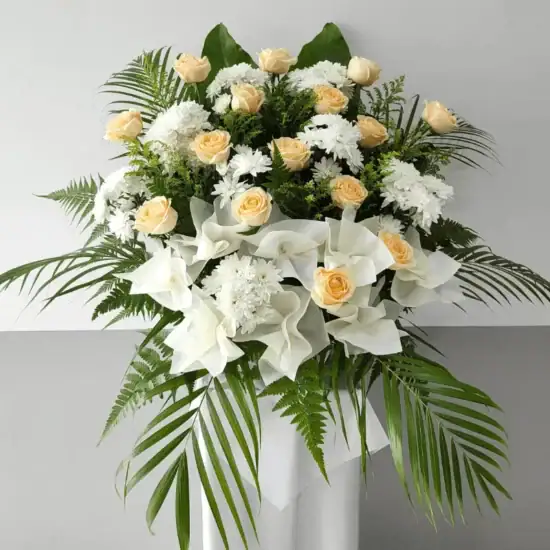
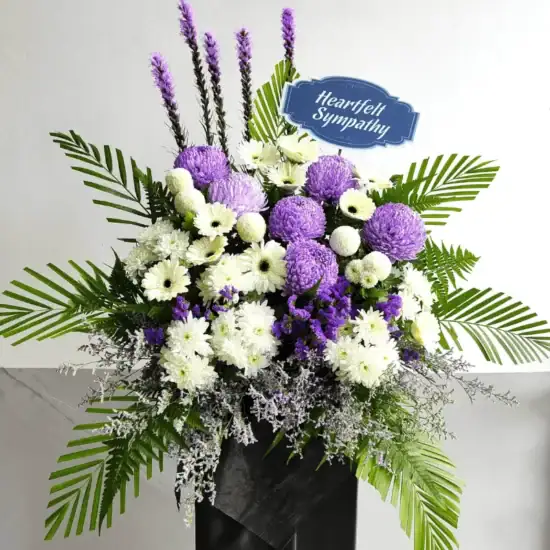
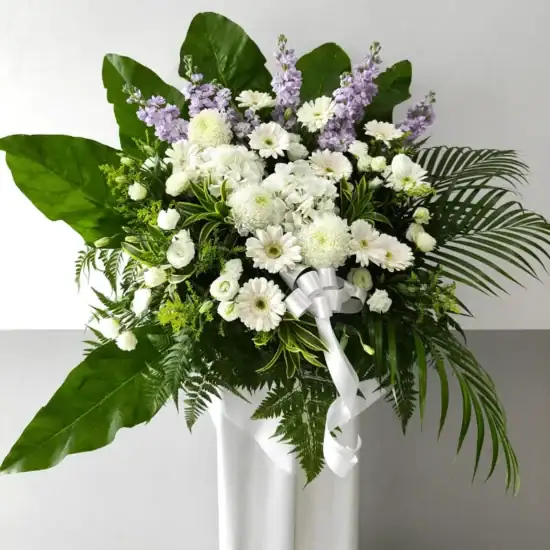
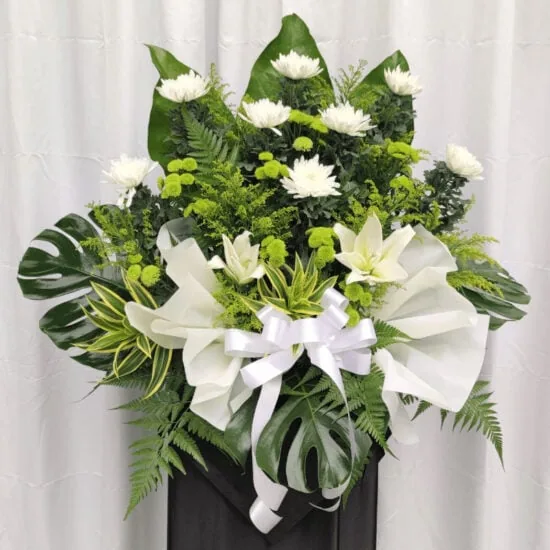
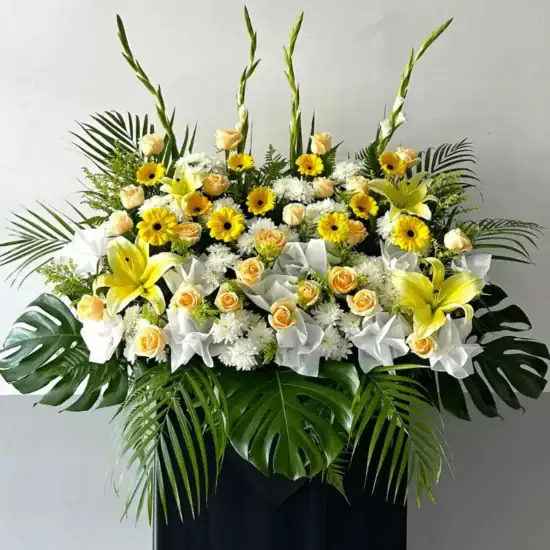
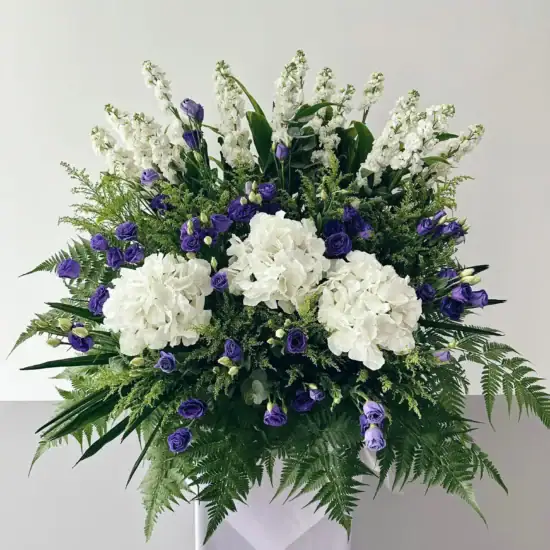
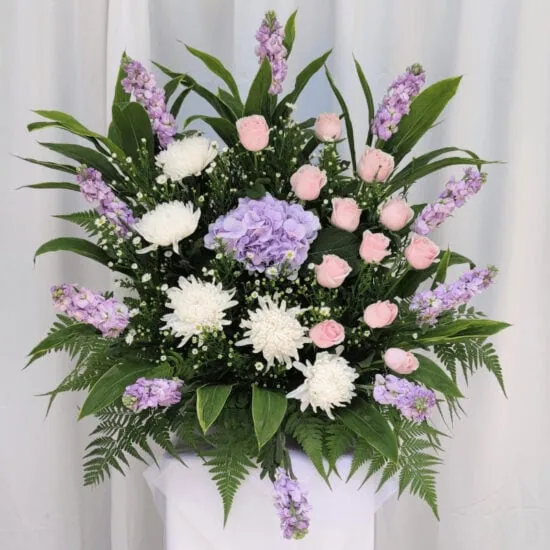
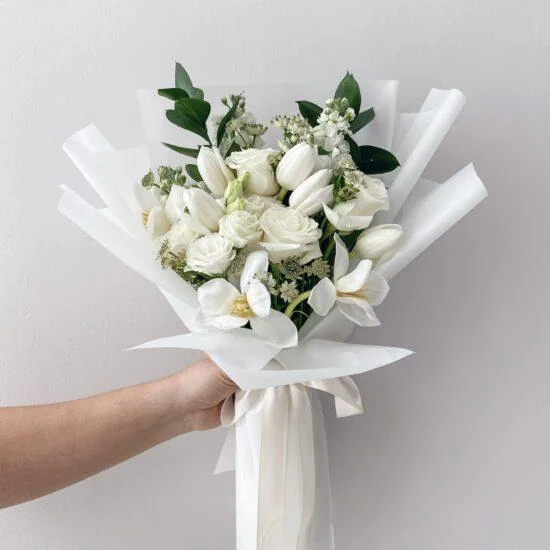
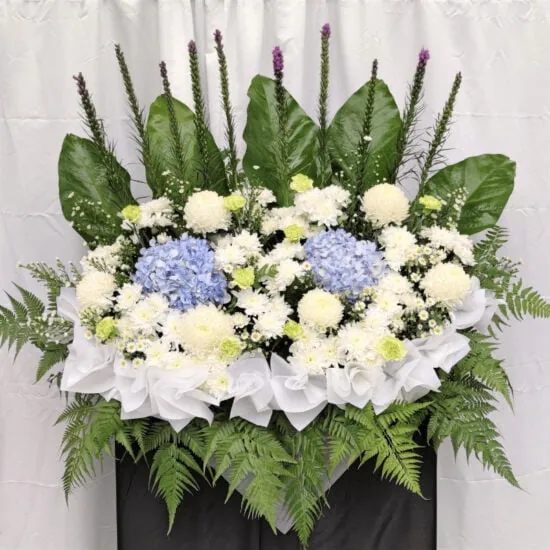
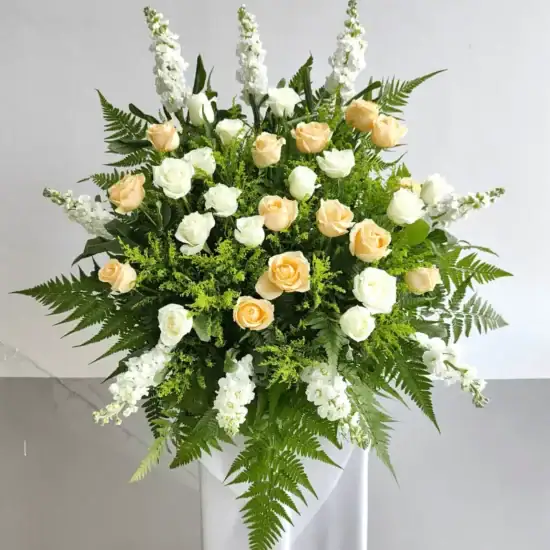
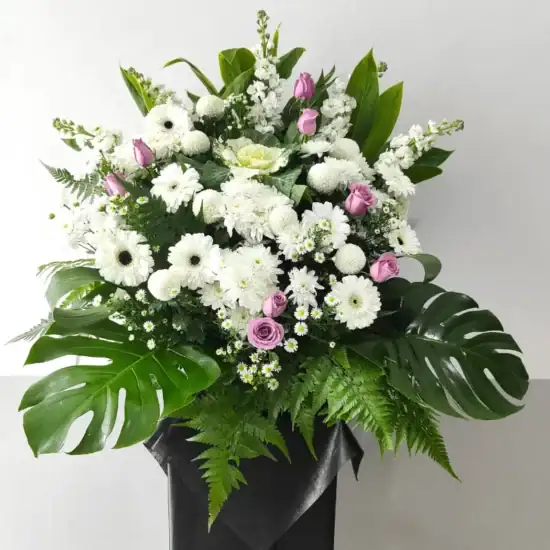
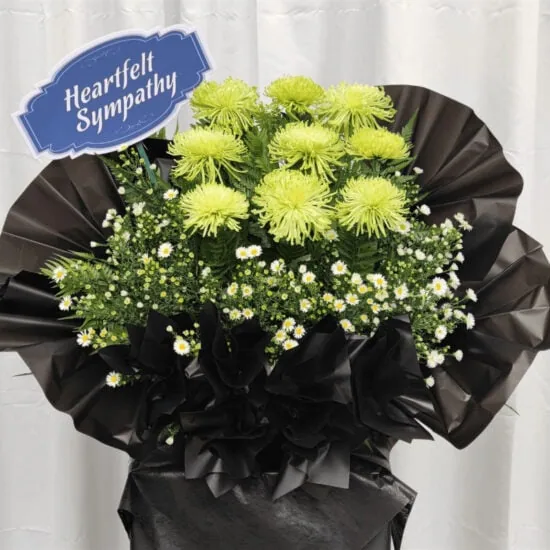
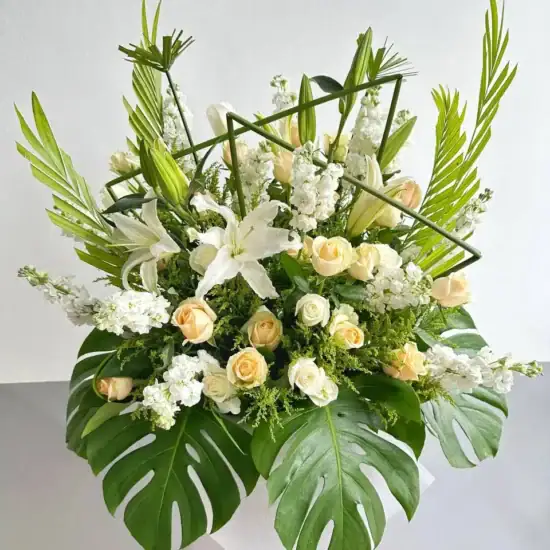
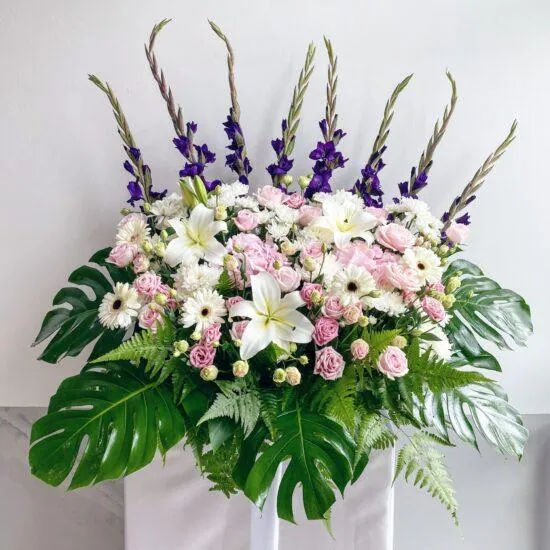
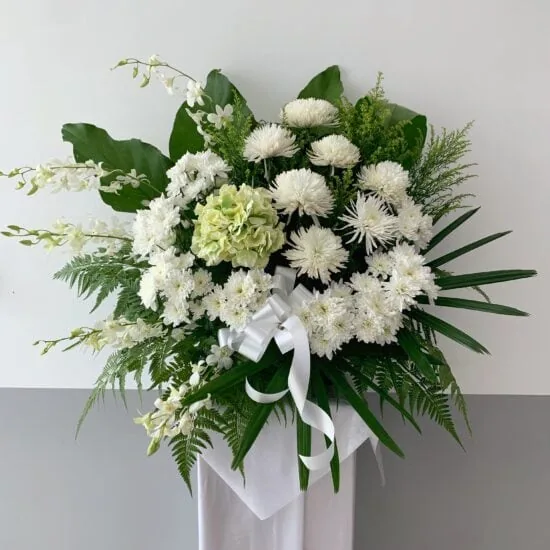
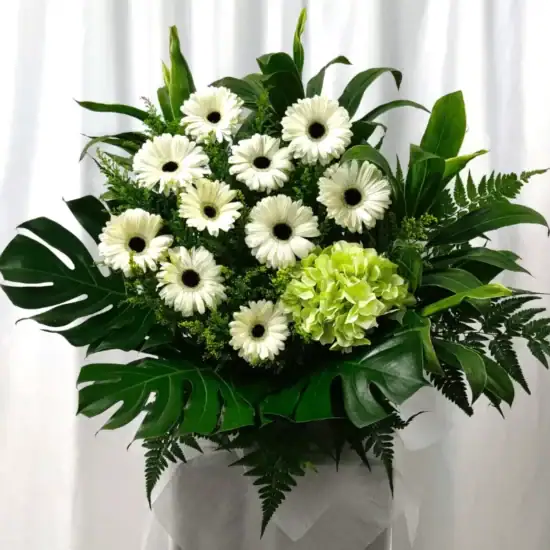
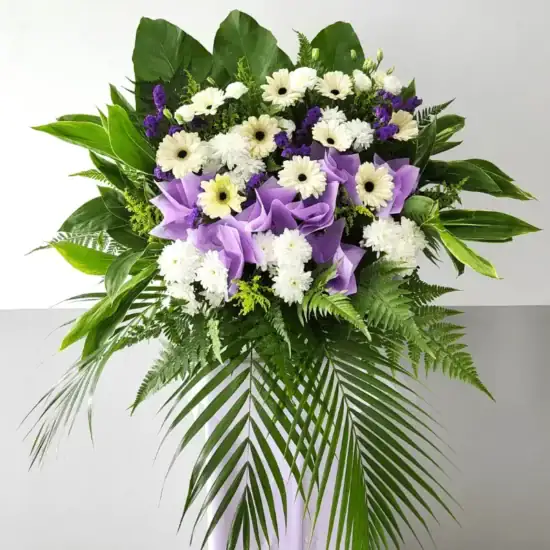
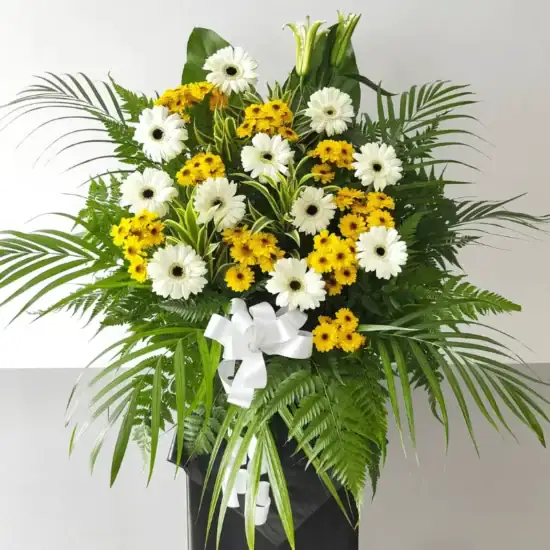
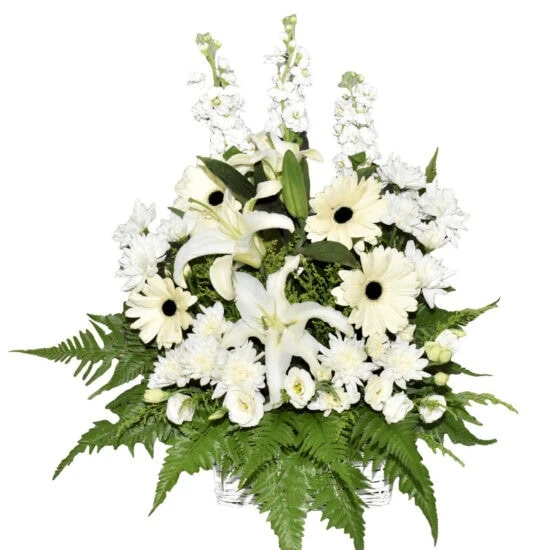
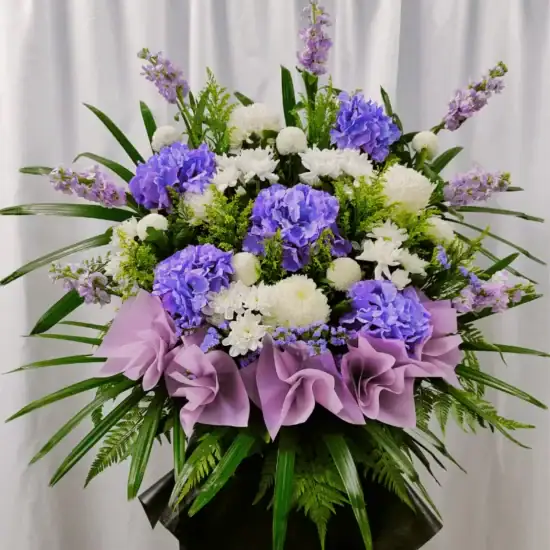
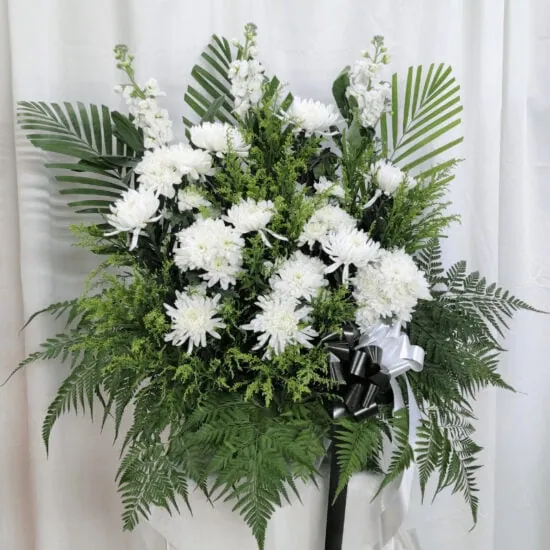
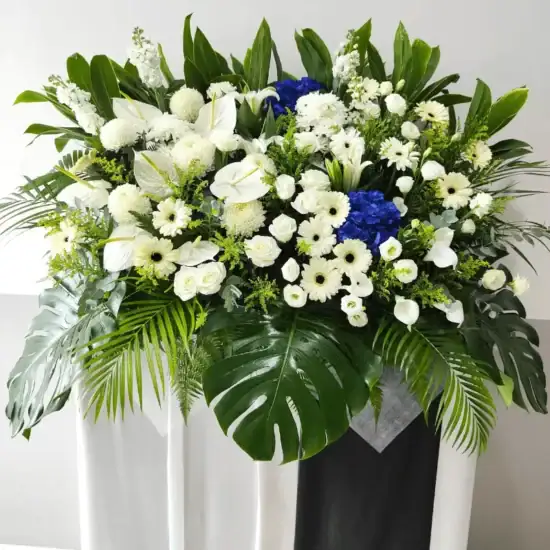
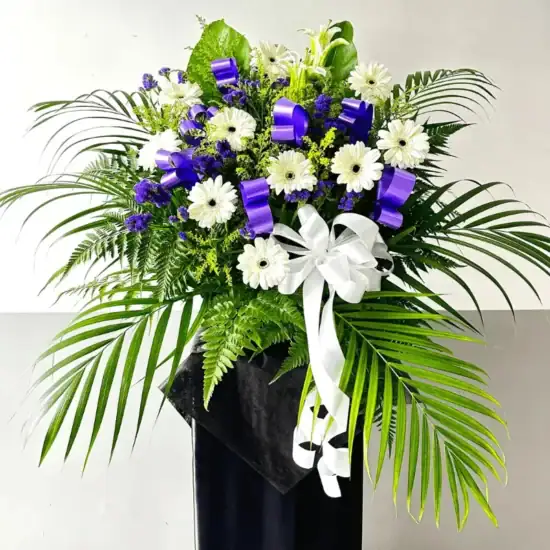
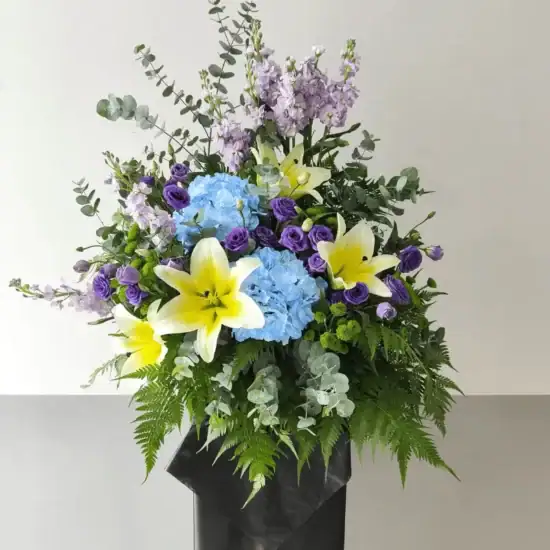
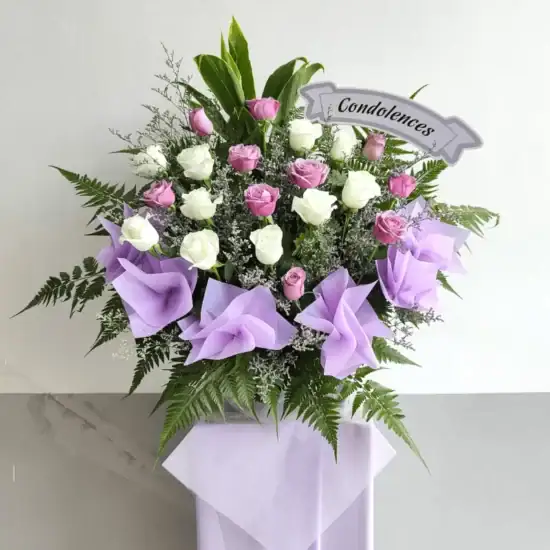
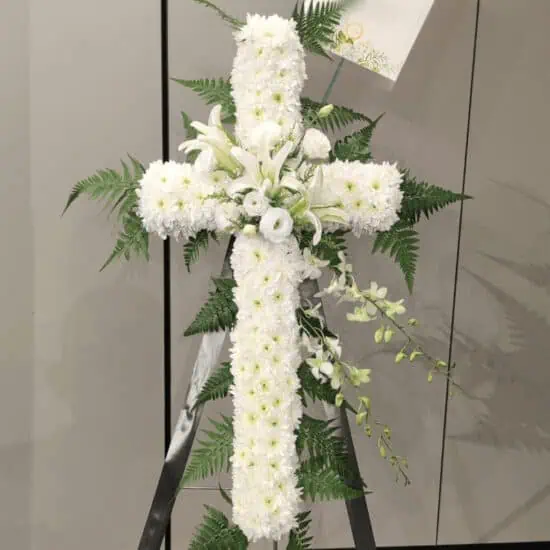
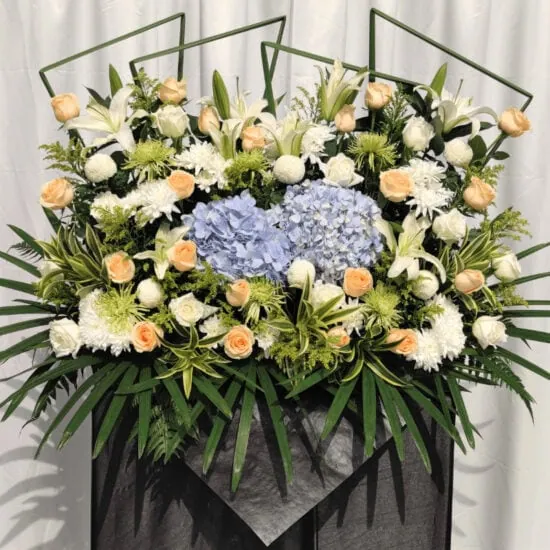
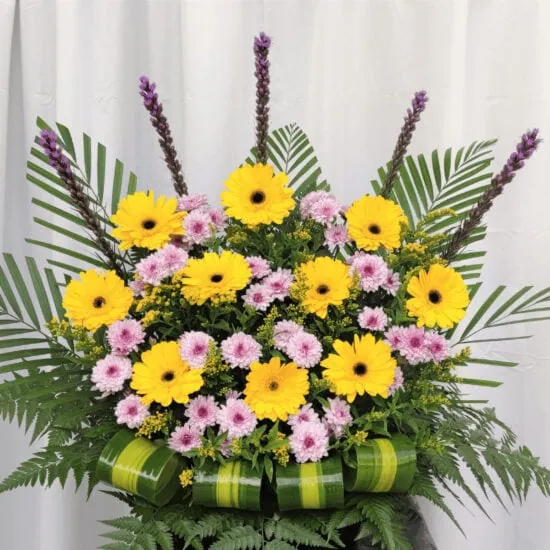
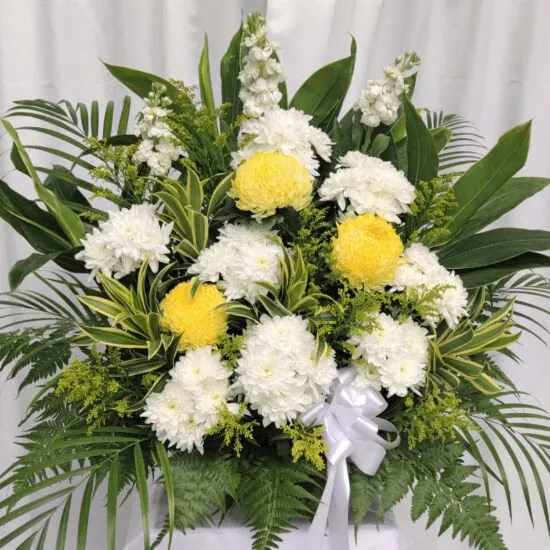
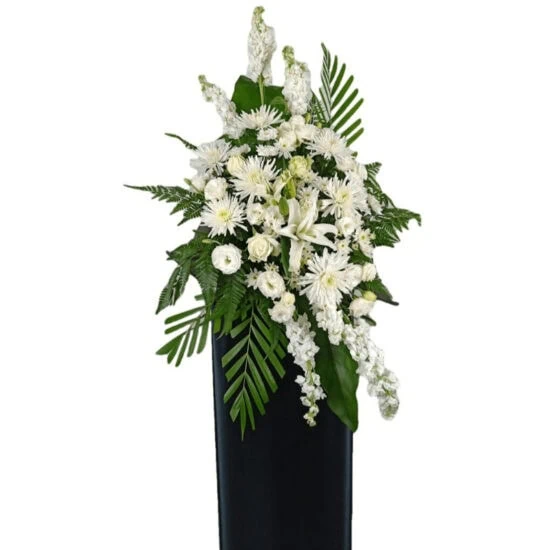
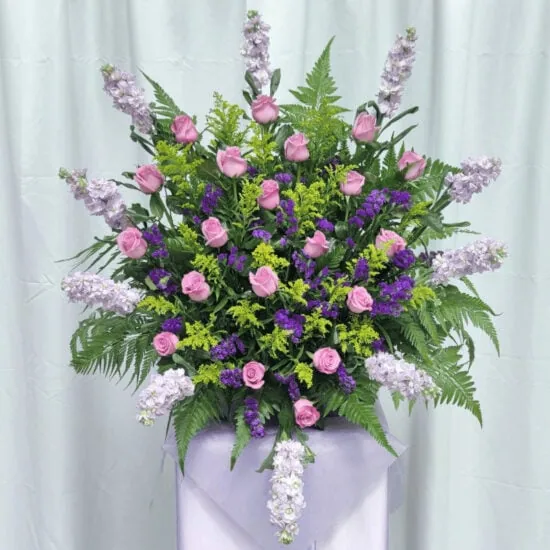
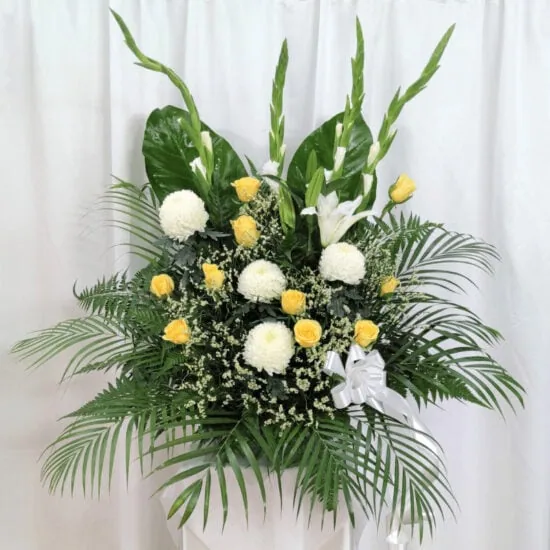
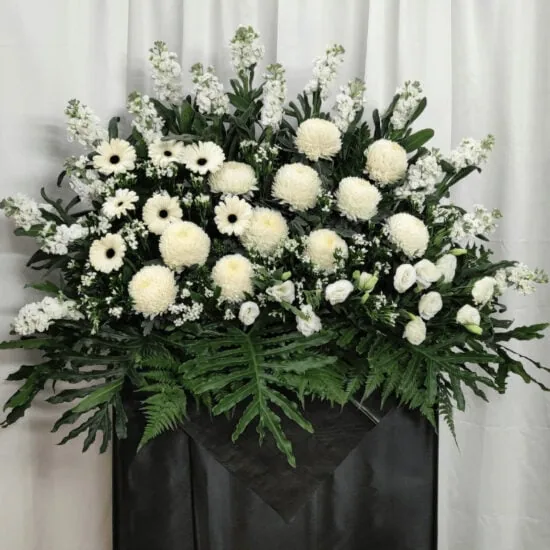
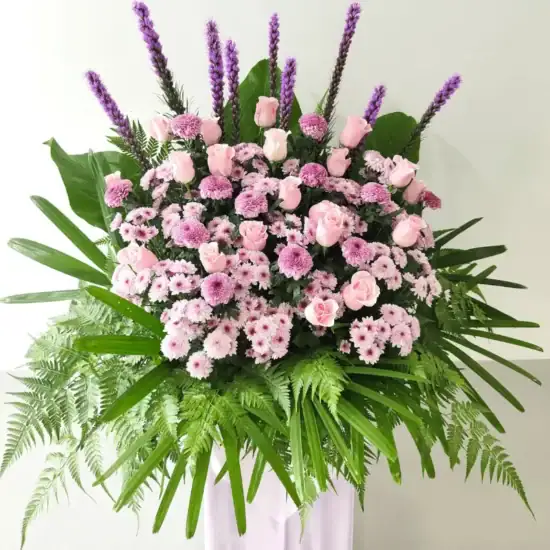
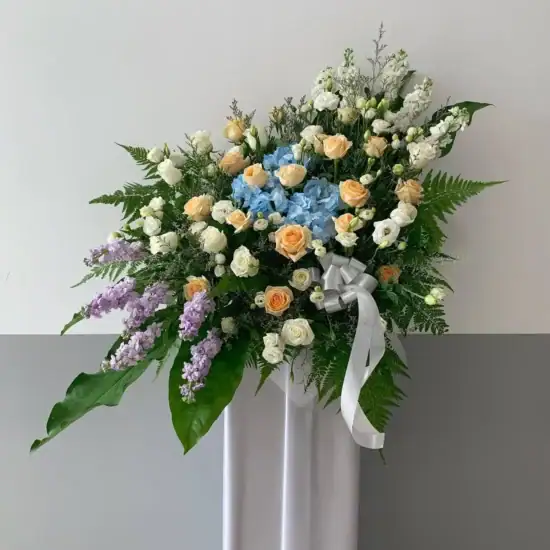
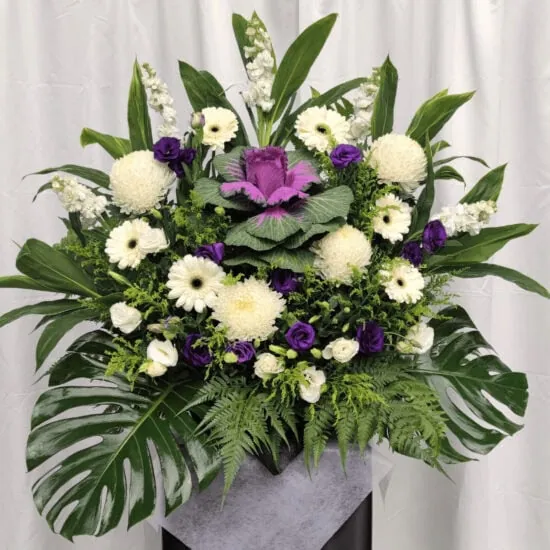
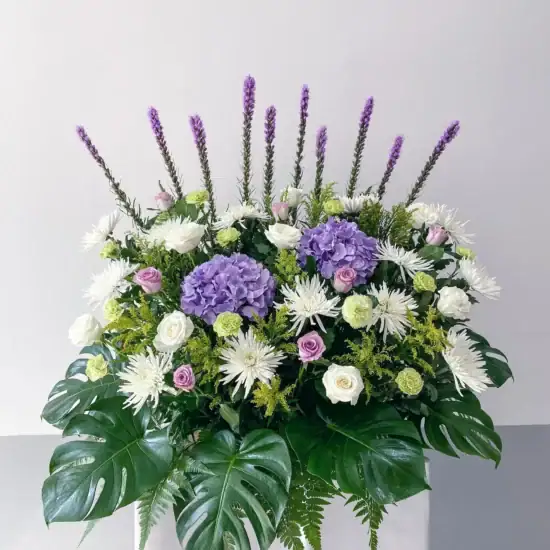
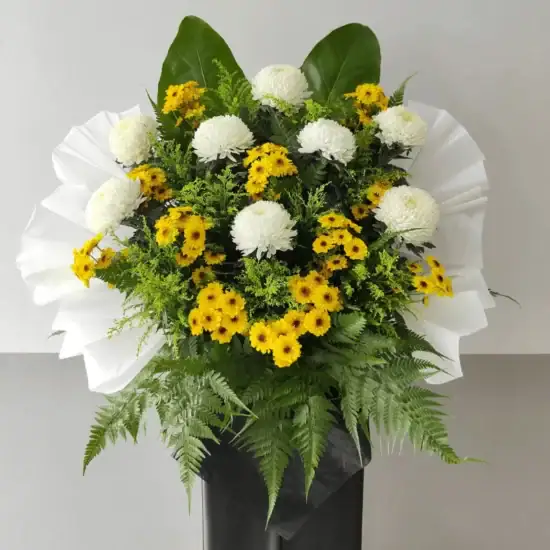
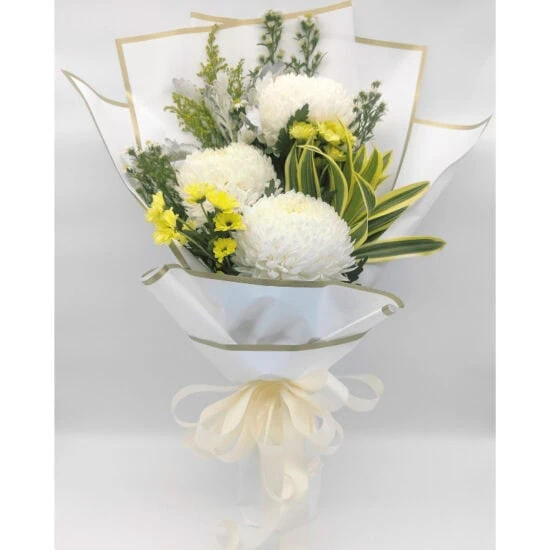
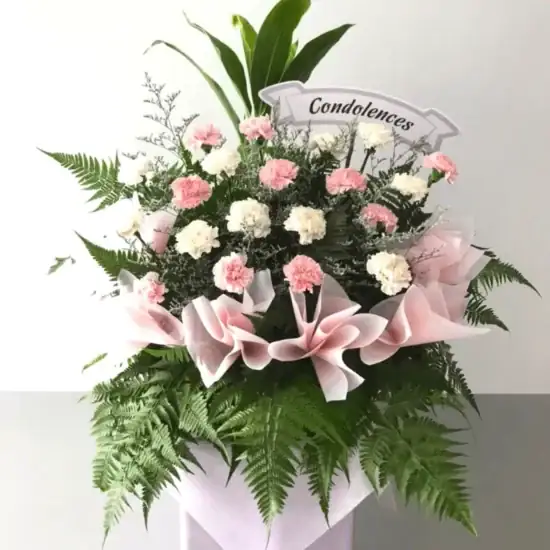
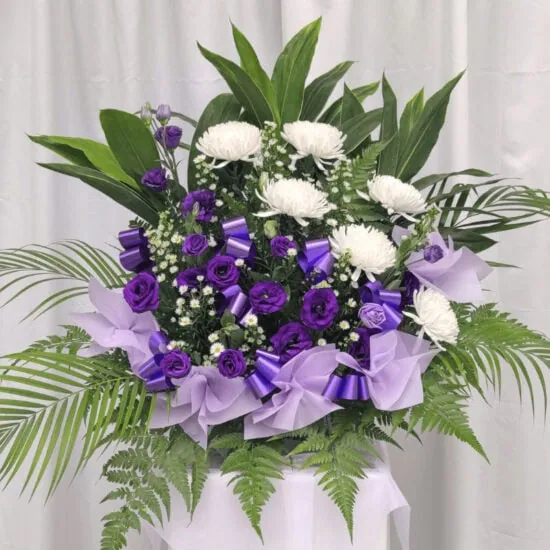
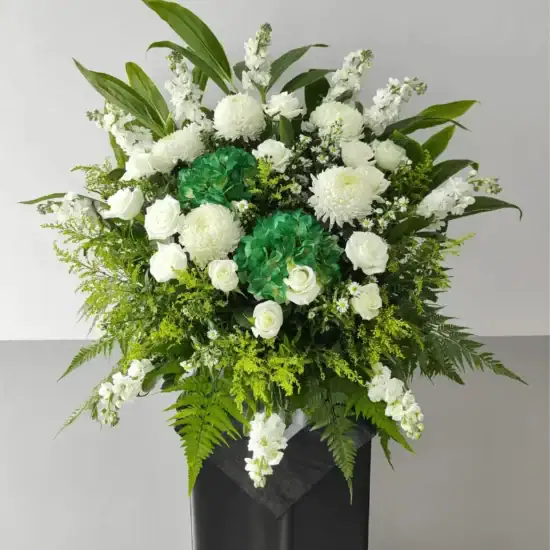
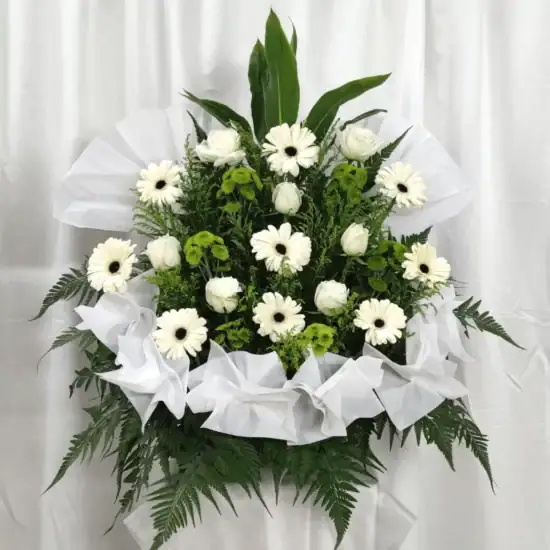
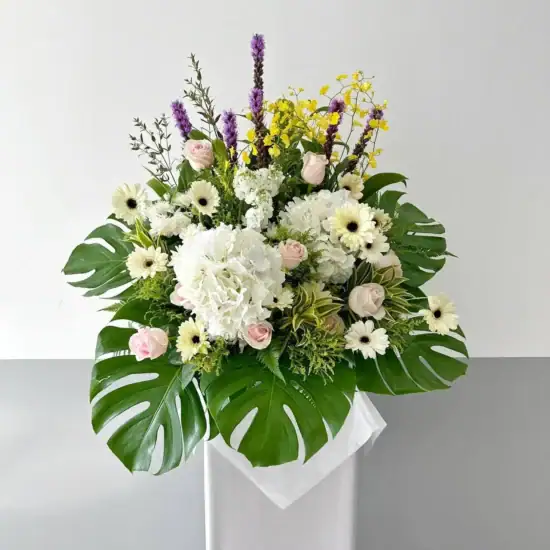
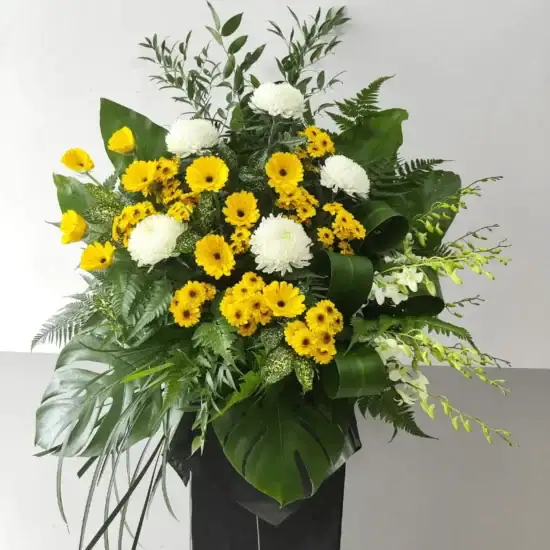
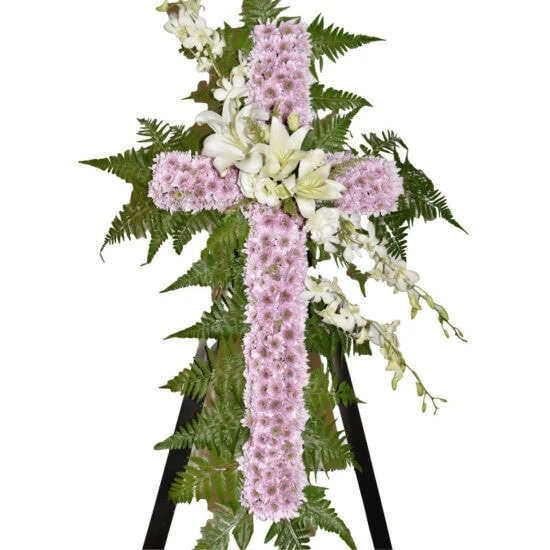
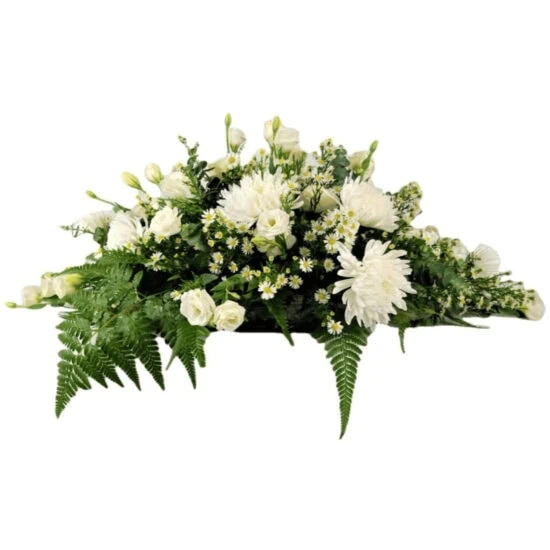
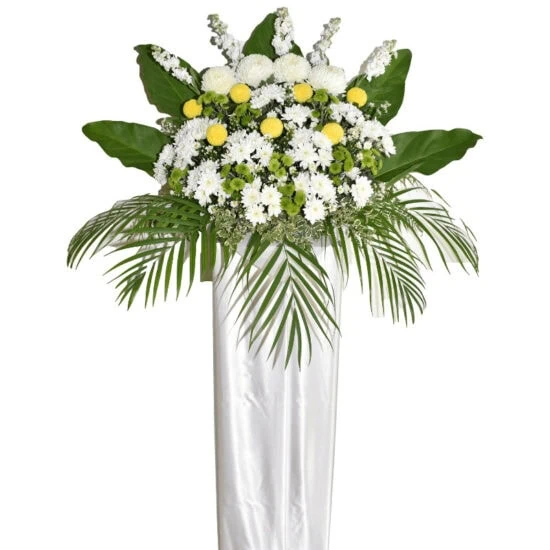
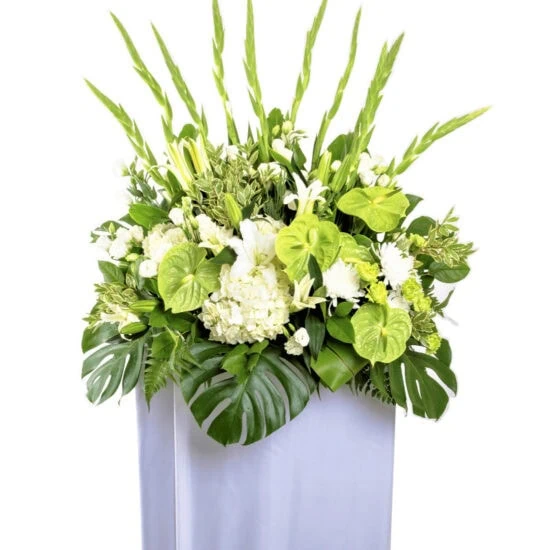
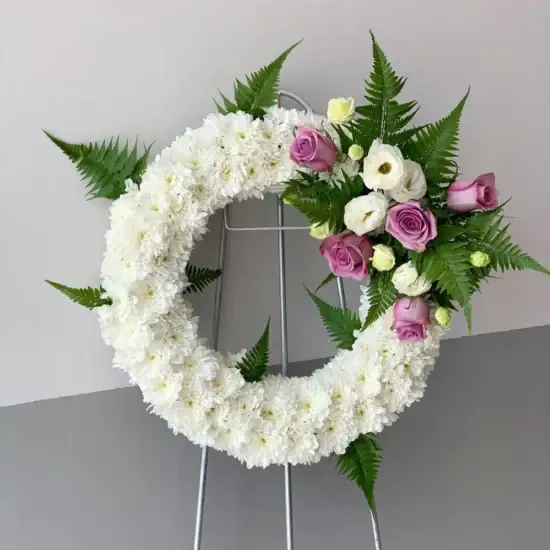
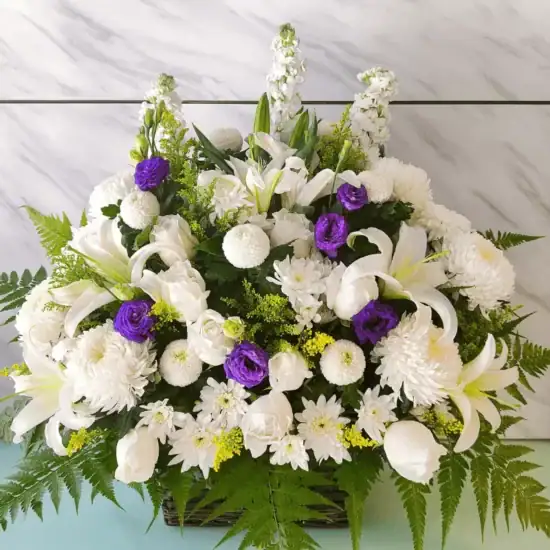
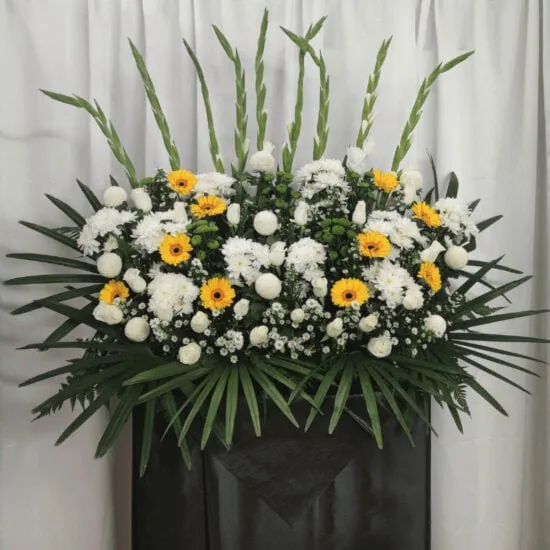
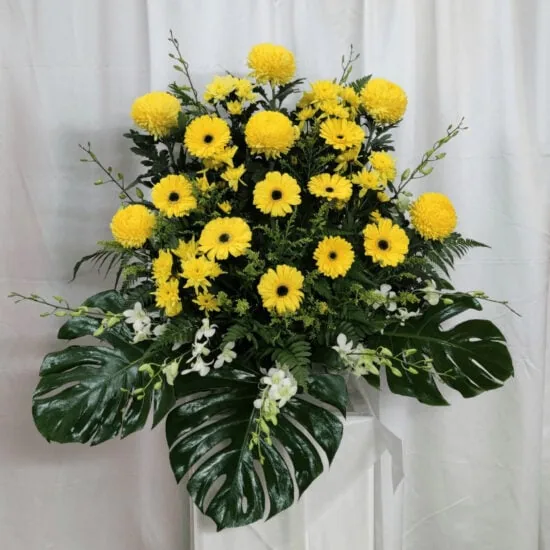
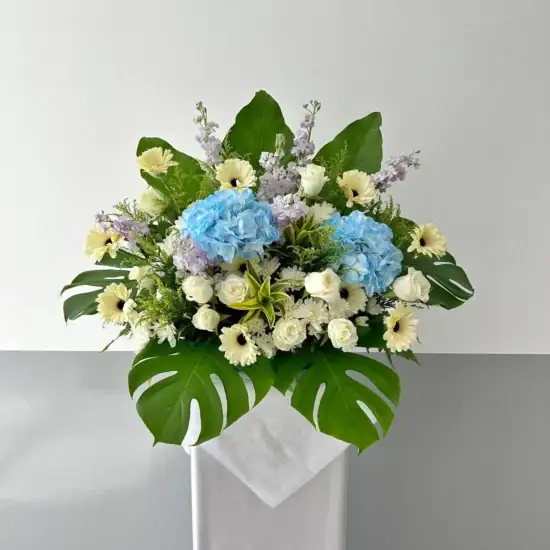
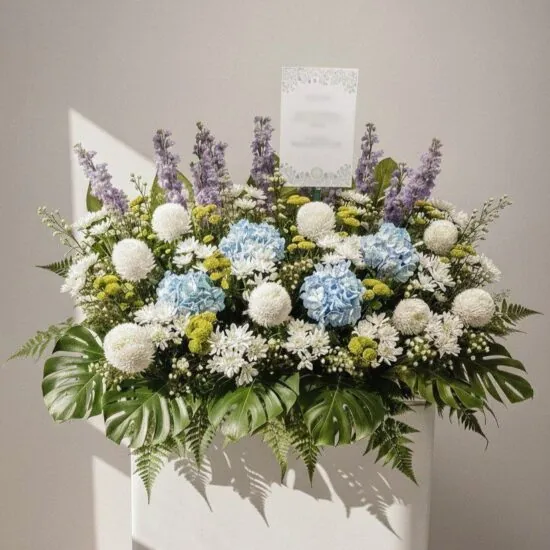
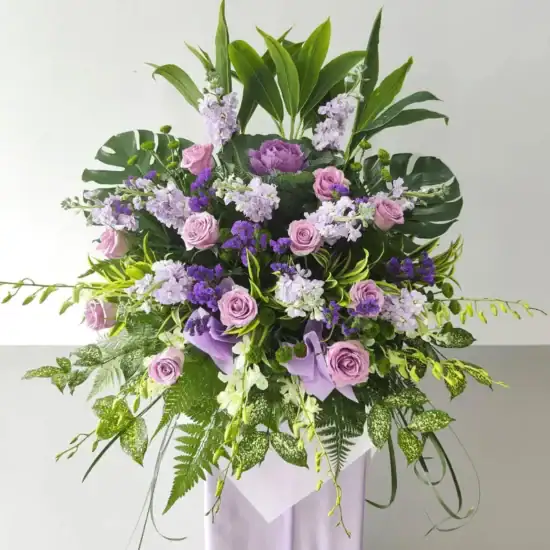
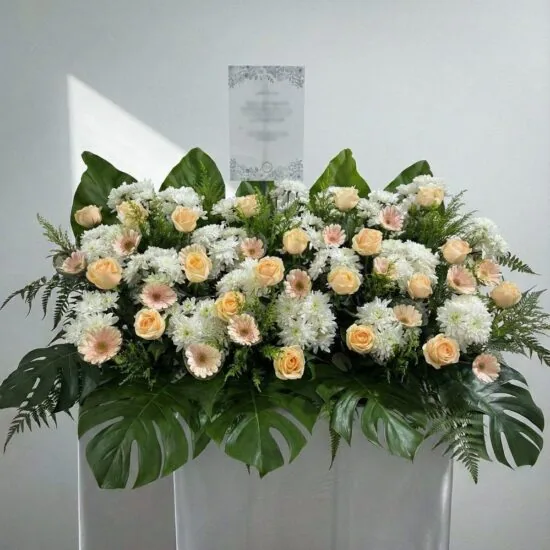
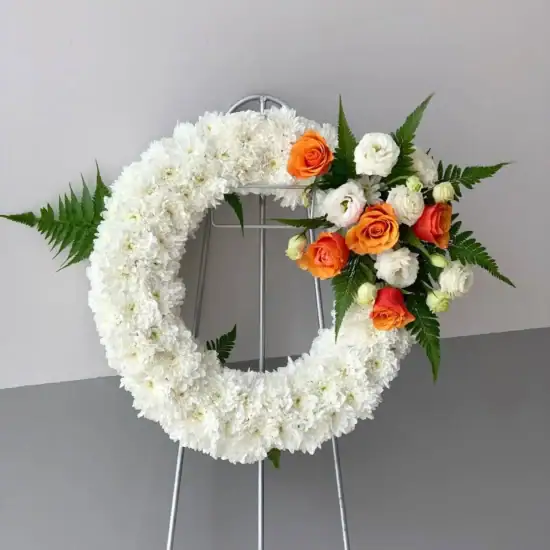
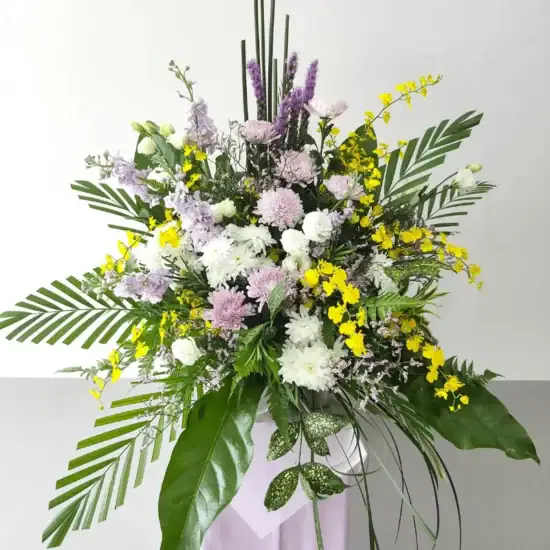
When words are difficult to find, condolence flowers can express sympathy, respect and support for a grieving family. Sending funeral flowers shows that the person who has passed away, and those mourning their loss, remain in your thoughts.
At Little Red Dot Florist, we create condolence wreaths, funeral flower stands and sympathy bouquets for wakes, memorial services and funerals throughout Singapore. Order by 5pm and your flowers reach the wake the same day, any day of the year. Every arrangement is photographed and sent to you on WhatsApp before it leaves, and again once it is delivered.
Wreaths, stands and sympathy bouquets
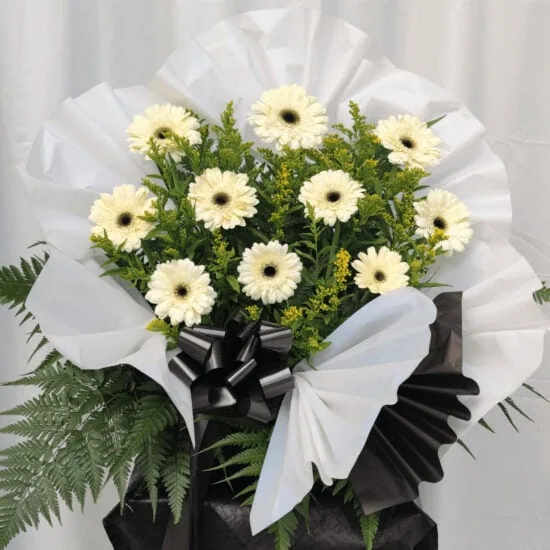
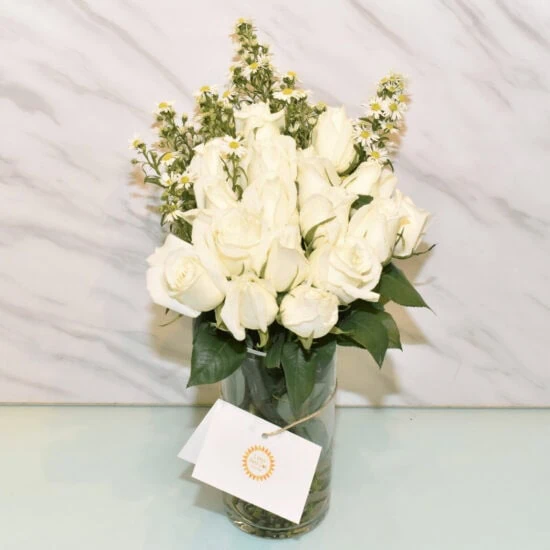
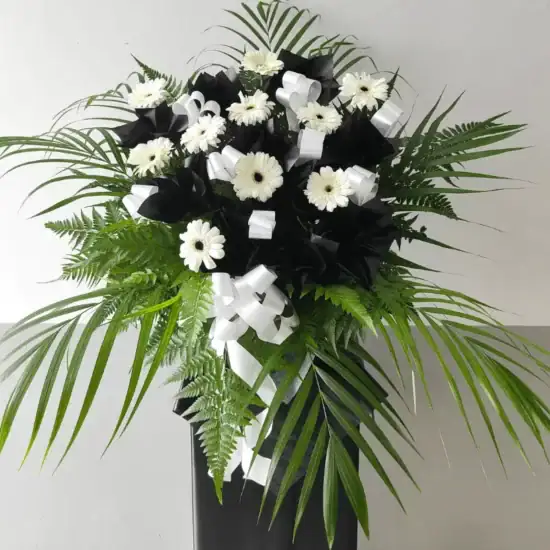
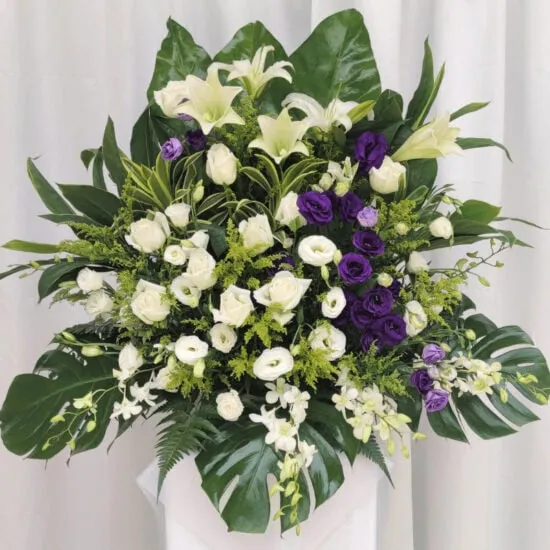
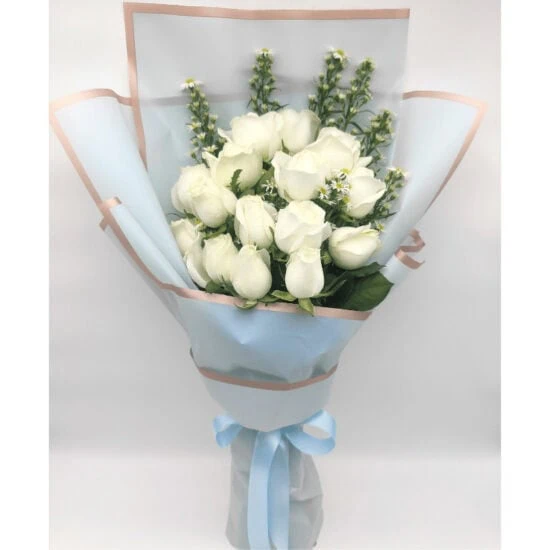
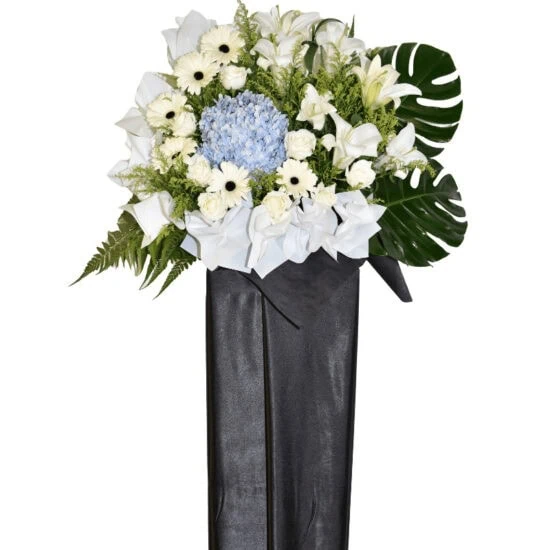
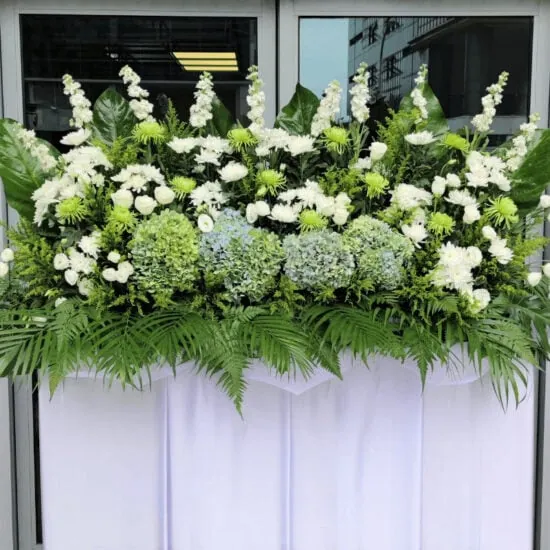
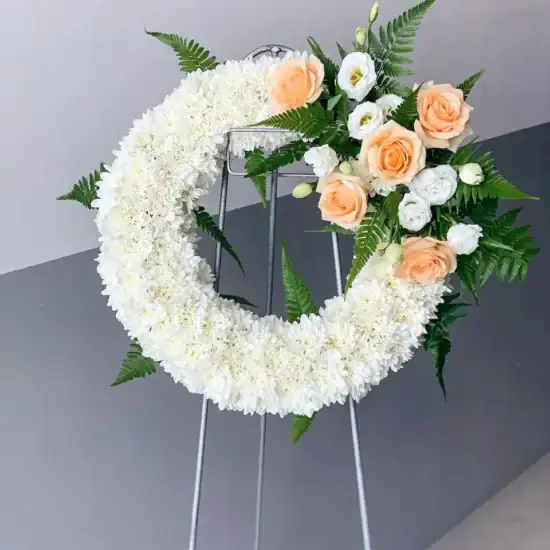
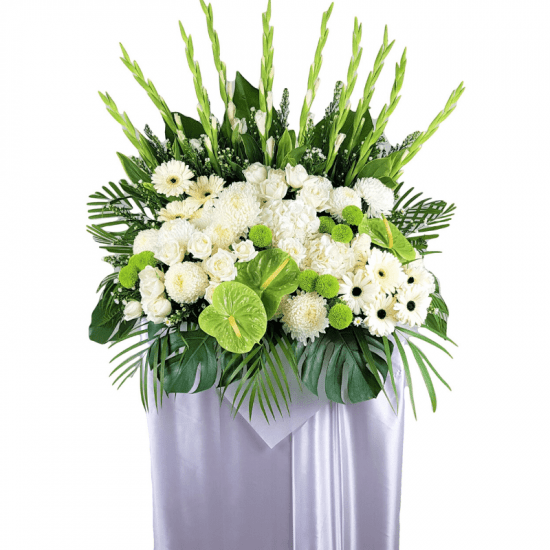
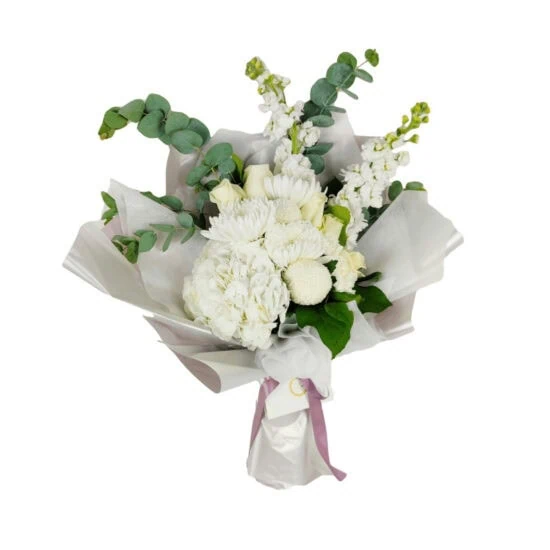
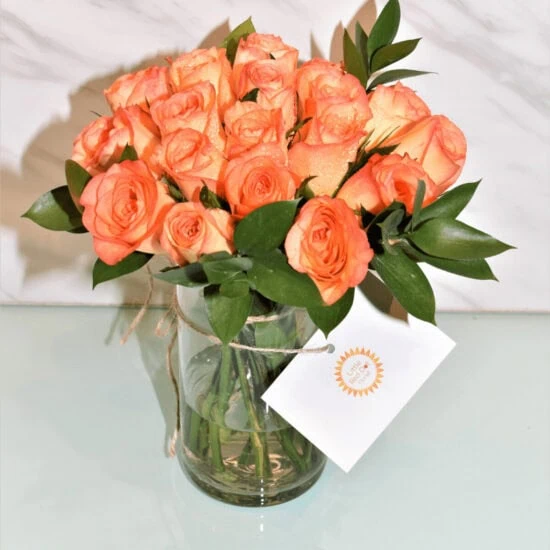
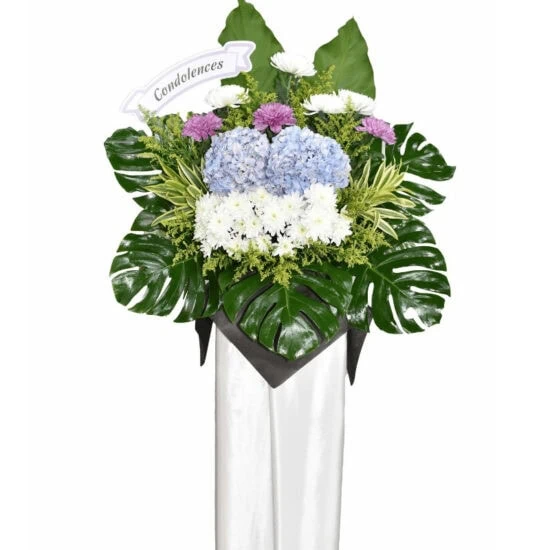
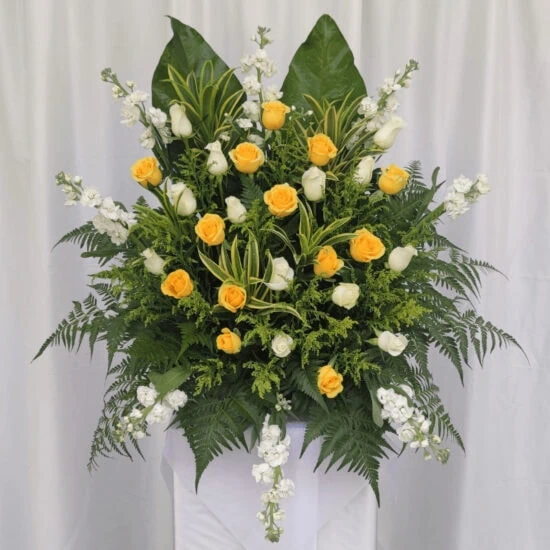
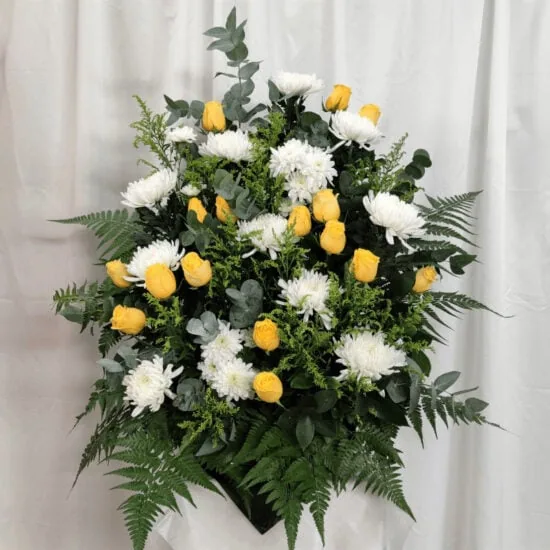
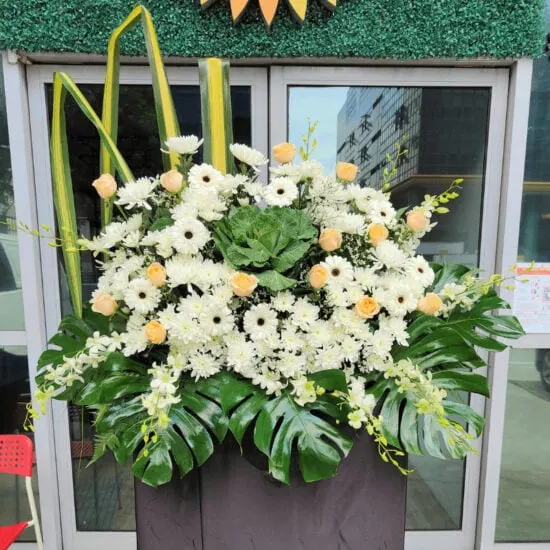
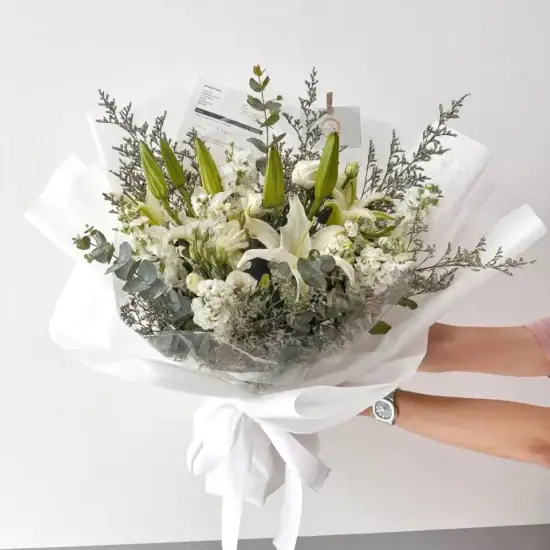
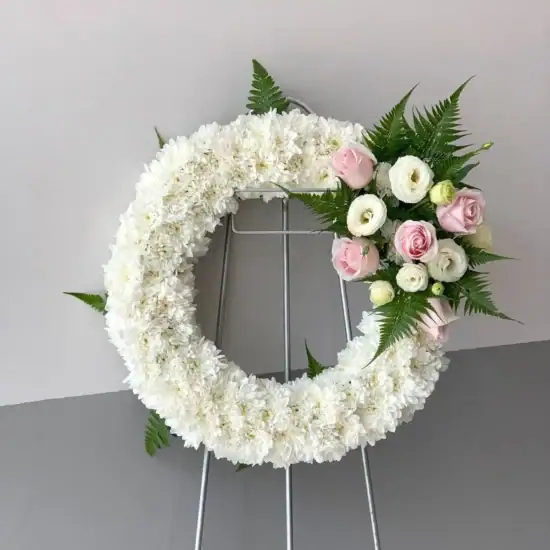
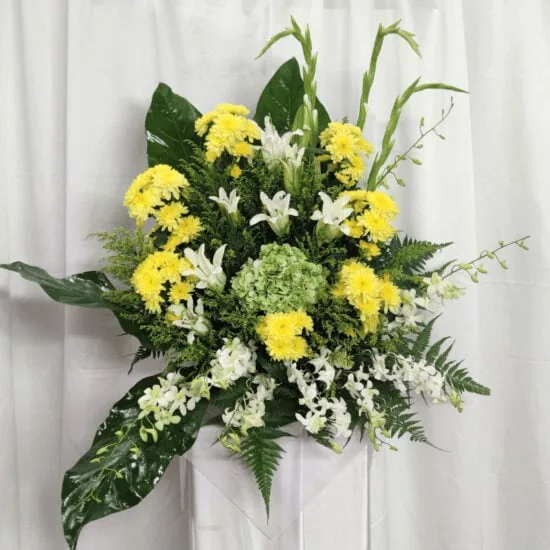
We deliver to more than 1,500 wakes across Singapore every year, and most orders come down to one decision. A funeral wreath is the usual tribute from one person or one family. A condolence flower stand is larger, and it is what companies and groups send when the name on the card should be easy to read across the hall. Sympathy bouquets and vase arrangements go to the family’s home rather than the wake, and they suit the quieter days after the funeral.
Prices start from S$66 for a sympathy bouquet and from S$93 for wreaths. A message card is free with every order, and we will help you word it in English or Chinese.
- Browse funeral wreaths for a personal or family tribute, delivered to any parlour the same day.
- Browse condolence flower stands for a company or group tribute.
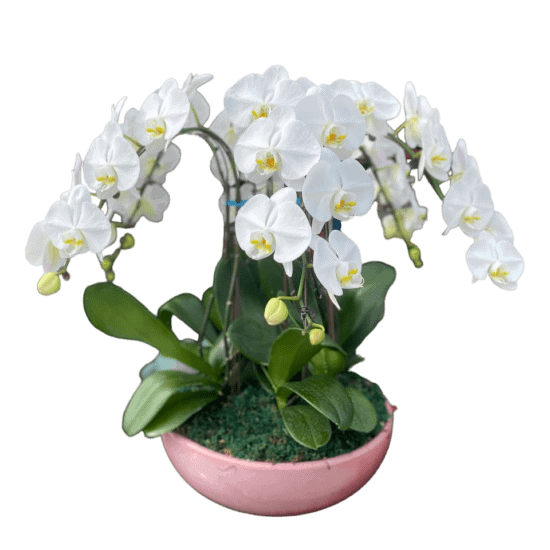
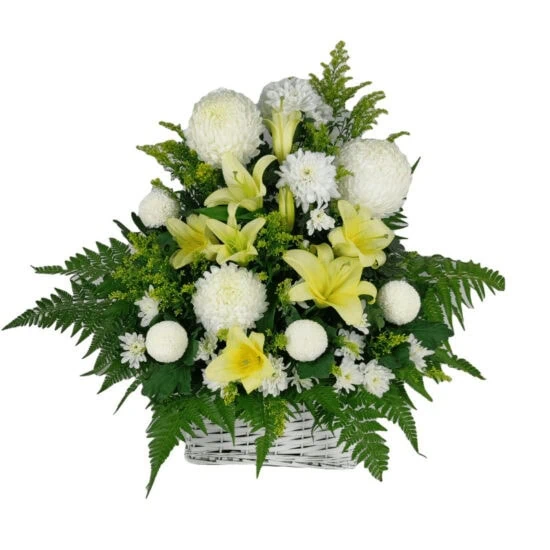
- Sending to the family’s home instead? Choose a sympathy bouquet or vase arrangement from the range above.
The significance of condolence flowers
Giving condolence flowers is a traditional way to honour someone who has passed away while offering comfort to their family. The practice goes back thousands of years and continues across the many cultures and religions found in Singapore today. Funeral flowers are more than decoration. A respectful wreath, with a sincere message, tells the family they are not alone in their grief, and lets the flowers speak when words are not enough.
Choosing funeral flowers in Singapore
White and neutral flowers are the common choice because they convey peace, remembrance and respect. Popular picks include chrysanthemums, lilies, roses, carnations, gladioli, hydrangeas and matthiola.
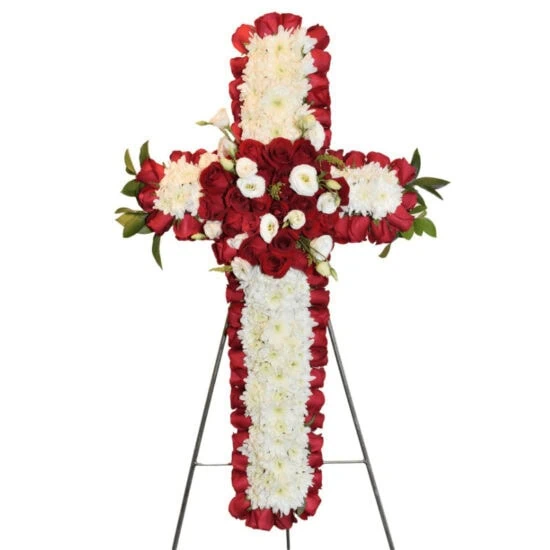
The right choice can depend on the family’s religion and traditions. Singapore is home to Buddhist, Taoist, Christian, Catholic, Hindu, Muslim and non-religious funeral customs, and each treats flowers differently. For Chinese Buddhist and Taoist wakes, stay with white, cream and yellow, and leave red out. Cross designs suit Christian and Catholic wakes. Hindu families usually arrange the flowers themselves, and Muslim families often prefer none at all, so ask the family first in both cases. If you are uncertain, a simple white or neutral arrangement is generally a respectful choice, or tell us the parlour and the faith and we will suggest what we normally send there.
We also prepare customised arrangements. Contact us if you have a preferred colour palette, flower selection, size or budget. Substitutions are occasionally needed because of seasonal availability, but we keep the arrangement’s intended look and value.
What condolence message should you write?
A condolence message does not need to be lengthy. The most comforting messages are sincere, gentle and appropriate to your relationship with the family. Short lines that fit clearly on a wreath or stand card:
- With deepest sympathy and heartfelt condolences.
- Our deepest condolences to you and your family.
- Forever remembered and deeply missed.
- In loving memory of a life so beautifully lived.
- May you find comfort and strength in the days ahead.
- 节哀顺变
- 深切哀悼
- 一路走好
A message to a friend can be more personal and mention your memories of the person. A message from a workplace should be respectful and concise, signed with the organisation’s name or “[Company name] and colleagues” rather than a long list of names. Always include who it is from, so the family knows who sent the flowers. If you are writing in Chinese and unsure of the wording, we will help you check it before it goes on the card.
Condolence flower delivery across Singapore
If you cannot attend the funeral in person, you can still be present through your flowers. We deliver islandwide, free to most addresses: funeral parlours, void decks, churches, temples, crematoriums, memorial halls and private residences. Provide the parlour name and the hall or lot number and we handle the rest.
If the wake has already started, you are not too late. Most wakes run three to five days, and flowers arriving on the second or third evening are still welcome. For urgent orders, WhatsApp us as early as you can and we will confirm availability.
Frequently asked questions about condolence flowers in Singapore
What flowers are best for condolences?
White chrysanthemums, lilies, roses, carnations, gladioli, hydrangeas, matthiola, and spider chrysanthemums are commonly used in sympathy arrangements. White and neutral colours are generally considered peaceful and respectful, although the best choice may depend on the family’s religion and preferences.
Is it appropriate to give flowers for condolences?
Yes. Sending funeral flowers is a traditional way to honour the deceased and support the bereaved family. If you are unsure whether flowers are appropriate for a particular religion or cultural tradition, check with the family or ask our florist for guidance.
What is a suitable short condolence message?
You can offer them your greatest sympathies, and ask them to stay strong.A suitable short condolence message could be “With deepest sympathy,” “Our thoughts are with you,” or “Forever remembered and deeply missed.”
What are the top 5 flowers used in sympathy arrangements?
Five popular choices are chrysanthemums, lilies, roses, carnations, and gladioli. Availability and specific varieties may change according to the season.
 Free Same Day Delivery Islandwide | Order by 5PM for Today’s Delivery | 800+ 5-Star Reviews