 Free Same Day Delivery Islandwide | Order by 5PM for Today’s Delivery | 800+ 5-Star Reviews
Floral Design: Definition, History, and Types
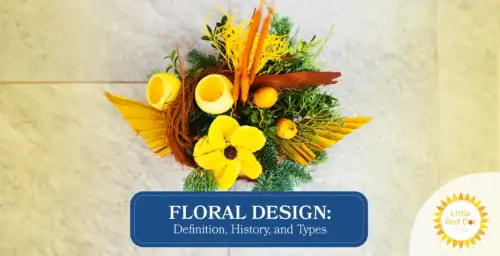
Floral Design is the method of making beautiful and well-balanced arrangements with flowers and plant materials. The floral design is arranging fresh or dried plants for home decor or as part of religious rituals, festivities, events, or celebrations. It includes leaves and flowers to demonstrate their innate beauty, combining form, hue, and texture to produce an elegant and attractive outcome.
The history of flower design dates back to ancient times. The Egyptians were the first to use floral arrangements as decorations, making flower collars, wreaths, and garlands for religious festivities. The Greeks and Romans expanded on the art form, using flowers to decorate homes, temples, and public places.
Flower design evolved during the Renaissance, with complex arrangements in paintings and ornaments. The Victorian era witnessed a boom in its popularity, with lavish bouquets and floral designs emerging as prestige and wealth indicators. The field of flower design keeps evolving, incorporating new materials and designs with traditional methods.
Floral design is used on several occasions and circumstances, such as weddings, memorial services, business gatherings, and home decor. The floral pattern refers to the design and arrangement of flowers. It is utilised in interior design to give living areas an appreciation of elegance and nature. The decorations help to express emotions, set the tone, and enhance the event’s atmosphere.
Designing flowers comes in different types, such as bouquets, wreaths, garlands, and centrepieces, each with an aesthetic and functional purpose. Ikebana, the Japanese art of floral design, is another type that shows simplicity, harmony, and balance.
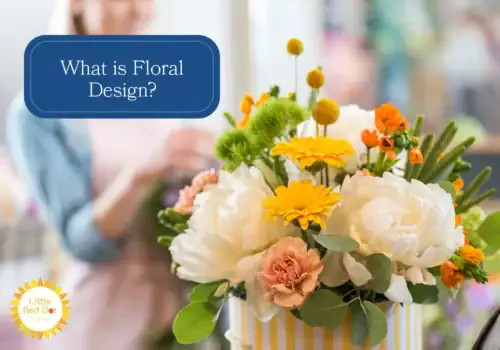
What is Floral Design?
Floral Design is a branch of floristry and the “art” of styling flowers, leaves, other plants, and containers. Most containers, such as vases and pots, hold the flowers and their base. It entails designing and choosing line, form, colour, and texture to create a harmonious unit based on balance, contrast, rhythm, size, proportion, harmony, and dominance.
Different forms and colours are created by bending and adjusting branches, vines, and reeds, while thin flowers or branches provide lines. Surface quality is characterised by a texture that varies on leaves and stems. Floral design requires the technical expertise of skilled floral designers who incorporate the elements they use.
What is the Use of Floral Design?
The use of Floral Design is perfect for any occasion or event. Floral designs add to the mood of corporate gatherings, banquets, and workspaces, creating a positive and welcoming vibe. They improve aesthetics, express emotions, and create distinct atmospheres. Bouquets are essential to birthday, anniversary, and wedding festivities in public and private events. Flowers represent happiness, love, and fresh starts. They are used to showing respect and sympathy for the departed at solemn functions such as funerals.
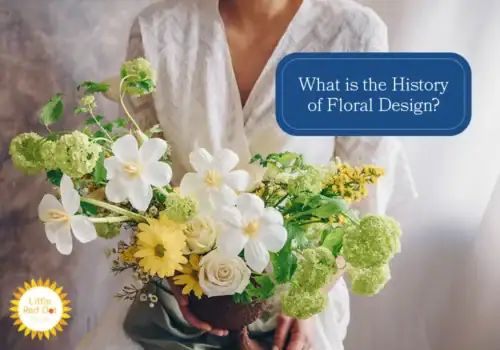
What is the History of Floral Design?
The history of Floral Design started in the Egyptian Period (2800-28 BC). The Egyptians used flowers for ornament. Flowers were arranged in vases for table decorations, processions, and burials. Images of arranged flowers are discovered on carved stone reliefs and painted wall decorations
The ancient Egyptians used flowers such as lotuses, Iris Sibirica, delphiniums, narcissus, palm trees, papyrus, and roses for religious purposes. Floral garlands were worn by loved ones and placed at tombs. Egyptian wall paintings date from the fifth century B.C. to Cleopatra’s era.
The ancient Greek Period (600-146 BC) and Roman Period (28 BC-325 AD) decorated and created artwork with flowers and herbs, substituting garlands and wreaths for vases. Famous foliage included parsley, ivy, bay, acorns, and oak leaves. Laurel (bay leaves) wreaths were given to sports competition winners, poets, and military achievements. Garland wreaths represented power, honour, and devotion to athletes, poets, and heroes.
The Romans and Greeks had the opportunity to use flowers more lavishly during religious ceremonies due to their wealth and influence, similar to the Egyptians. Roses were thrown down to a depth of one foot from the ceiling and “rained” down during banquets. The scent of many roses was overwhelming. The strong scent led the Romans to refer to it as the “Hour of Rose,” which they utilised in their meals.
The Byzantine Period (320-600 AD) contributed to floral design, which is mostly cone-shaped. Blossoms and fruits in vibrant colours were added to chalices and urns that held the plants. Common flowers seen in such arrangements were carnations, cypresses, daisies, and lilies. Ribbons were popular, and leaves and tiny flowers were arranged in arches to create a twisted effect on garlands.
Flowers were included in altar pictures, manuscripts, and paintings throughout the Gothic era, the Mediaeval Period (476-1400 AD), when monks had gardens with herbs and wildflowers. A therapeutic herb garden was necessary for physicians, yet relying on herbs without acknowledging God was considered inappropriate for Christians. Plants were used in sacred rites and ceremonies.
Italy was the birthplace of floral design, which spread across Europe during the Renaissance Period (1400-1600 AD). Impressive paintings of beautiful floral designs in vases were in style. The paintings featured fruit flowers and leaves strung into garlands to adorn walls and vaulted ceilings. Petals were scattered across floors, streets, and balconies or piled into baskets.
The Italian Renaissance helped to revitalise the art of flower arrangement across Europe. Floral designs were standard during the fifteenth and sixteenth centuries, and various materials, such as marble, thick Venetian glass, and bronze, were used to build containers.
Floral patterns of the Baroque Period (1600-1700 AD) were initially symmetrical and oval, but later on, asymmetric crescents and S-shapes gained popularity. The Dutch-Flemish Period (1550-1700 AD) had extravagant floral designs, which were more balanced and concise. Their main selling point was the assortment of flowers in the bouquet.
Floral designs were formal and symmetrical in the Georgian Period (1714-1830 AD), categorised with different flowers. Active trading led to the rise in the popularity of oriental designs. The arrangements got more informal towards the end of the period as the scent of the flowers, which were thought to cleanse the air of diseases, became more prominent. Nosegays, known as “tussie-mussies,” were small, portable arrangements used to disguise unpleasant smells in a culture where bathing was often considered unhealthy.
Flowers were in style during the Victorian Period (1837-1901 AD), with compact and asymmetrical arrangements. “Tussie-mussie” bouquets eliminated the odours. Regulations for appropriate floral designs developed into an artistic profession in Europe by the end of the era.
Floral designing evolved into an art form from the middle of the 20th Century to the present, when contemporary designers wanted to ignore conventions and constraints. Their designs resulted in the development ranging from zero abstraction to complete abstraction, disregarding patterns and laws.
What are the Elements of Floral Design?
The elements of Floral Design include space, colour, line, form, and pattern. Combining the elements results in flower designs that appeal to the eye and express the essential artistic concept. Each component is vital in every floral design.
Space refers to how positive and negative spaces are used in the arrangement to create a balanced composition without being too crowded. Floral designers add width, depth, and a sense of openness to an arrangement, increasing its visual appeal and dynamic quality. Positive and negative space placement is essential for an aesthetically beautiful and well-proportioned floral design.
Colour is vital in establishing the tone and bringing harmony or contrast to the design. Colour theory principles are applied to produce the desired result. Designers must understand colour theory to combine colours that complement or contrast with one another. Cool shades such as blues, greens, and purples indicate peace and tranquillity, but warm colours such as reds, oranges, and yellows generate concepts of warmth and brightness.
A line is the visual approach that guides the viewer’s attention through the arrangement to create structure and flow. The arrangement of flowers, foliage, stems, and branches is an excellent way to create lines. They vary from diagonal to vertical up to horizontal to curved or straight. Each has a unique effect on the design. Horizontal lines imply stability and serenity, but vertical lines represent strength and height. Diagonal lines produce a vibrant, energising ambience, while curved lines add a sense of softness and movement.
The form includes the individual forms of the flowers and foliage and the overall shape and silhouette of the design. Forms are either geometric, such as circular, triangular, or square, or organic and free-flowing. The form used in a floral design determines its style and mood. For example, a compact, spherical form indicates harmony and completion, whereas an asymmetrical, cascading form implies movement and elegance.
The pattern is a crucial component of floral design. It involves repeating colours or lines to produce a coherent and pleasing arrangement. The repetition creates rhythm and flow in the design, moving the viewer’s eye around the piece. Asymmetrical patterns give dynamic appeal and originality, while symmetrical patterns offer balance and order. The arrangement appears better when patterns are used to integrate each component. Floral designs are made to look better by incorporating pattern elements, giving them structure and coherence.
What are the Principles of Floral Design?
The Principles of Floral Design involve balance, proportion, scale, rhythm, contrast, harmony, and unity. The floral design principles serve as core rules for creating beautiful and balanced arrangements. Floral designers produce attractive, vibrant, and fulfilling by putting such ideas into practice.
Balance refers to an arrangement’s visual stability, ensuring it is not top-heavy or unbalanced. Proportion refers to the size of the design’s components, such as flowers, foliage, and containers, to ensure they are in proper scale. Scale considers the location of the arrangement, ensuring it blends well with the landscape. Rhythm is the flow or movement within an arrangement that moves the viewer’s eye through the design.
Contrast creates visual appeal using pieces with different colours, textures, or forms. Harmony guarantees that every design element acknowledges one another, producing a coherent appearance. The structure achieves unity when its components and tenets function as a cohesive whole, giving the arrangement a sense of overall completion.
What are the Basic Techniques of Floral Design?
The basic techniques of floral design are critical for creating sturdy, long-lasting, attractive flower arrangements. The methods include wiring and taping, foam and grids, cutting and conditioning, and layering and grouping. They allow floral designers to produce detailed and successful designs.
Floral wire is inserted into flower stems and fastened with floral tape in a process known as “wiring and taping.” The technique gives stability and flexibility, allowing designers to bend flowers and foliage as desired while keeping delicate parts in place.
Stems within a container are supported and anchored by foam and grids. Flowers are kept moist and in place by floral foam, a substance that absorbs water and keeps flowers moist and in place. Grids constructed from plastic or tape facilitate the equal distribution of stems and provide a framework over the container’s opening.
Cutting and conditioning are terms used to describe the process of getting flowers and leaves ready for arrangement. It involves removing lower leaves below the waterline to stop bacterial growth and trimming stems at an angle to improve water intake. The flowers are kept in ideal shape and well-hydrated for longer-lasting bouquets.
The basic technique known as layering, sometimes termed stacking, involves arranging leaves or other thin, flat materials, one on top of the other, to create a visual effect. Grouping is arranging collections of identical floral materials and separating them from one another using clearly defined negative space.
What are the different Types of Flower Design?
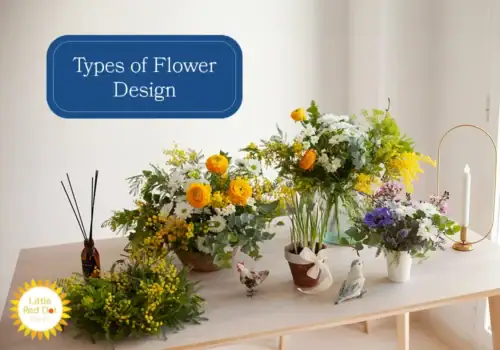
The different types of Flower Designs are listed below.
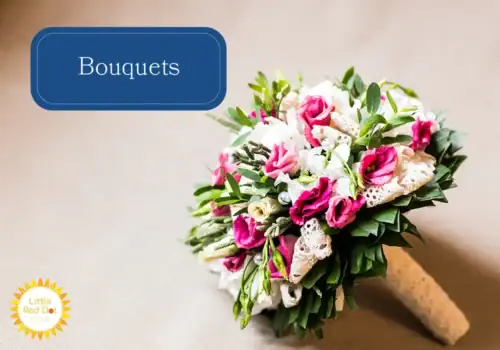
- Bouquets: Bouquets are small, handheld arrangements of flowers and leaves that come in various designs, from secured to loose and flowing. They are famous for weddings, special occasions, and gifts.
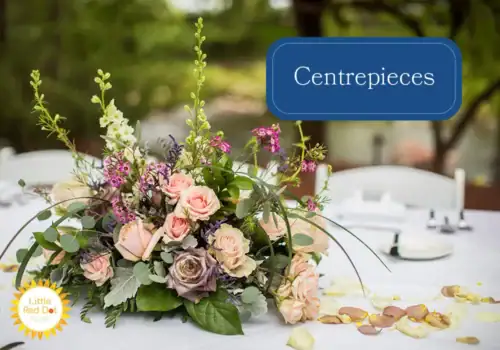
- Centrepieces: Centrepieces with a floral motif are conversational or dramatic. They include candles and other decorative accents to further the event’s theme. Floral centrepieces are utilised for weddings and business parties.
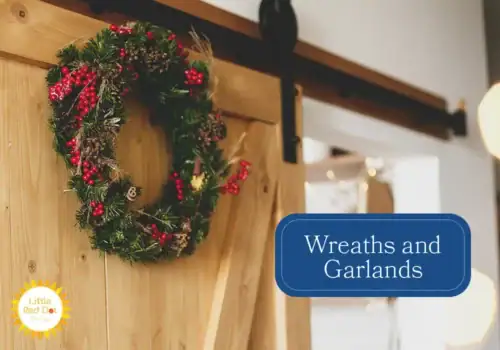
- Wreaths and Garlands: Wreaths and garlands are round arrangements used for door or wall ornament, made of flowers, leaves, or ribbon, that provide festive or elegant touches to rooms.
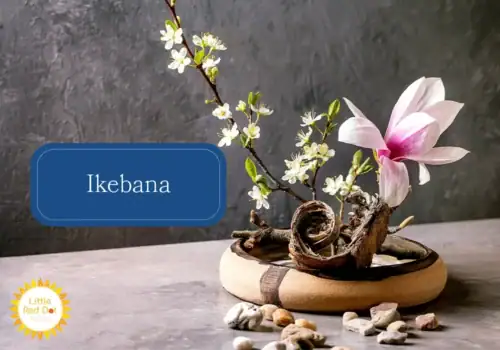
- Ikebana: Ikebana is a Japanese flower-arranging technique emphasising shape, harmony, and balance. It uses organic components such as moss, branches, and leaves, adding asymmetry and negative space for a calming effect.
1. Bouquets
Bouquets are handheld flower and leaf arrangements for weddings, special events, and gifts. A bouquet is free and flowing, though it is tied and symmetrical. For example, bridal bouquets are hand-tied, circular, or cascading. They have a distinctive shape and structure. Bouquets are simple to carry and go well with the wearer’s outfit. They are given to express appreciation, sympathy, or love. Giving flowers is another way to show thoughtfulness.
2. Centrepieces
Centrepieces are floral designs used at weddings, banquets, and corporate gatherings. Centrepieces are intended to be a focal point on a table. Table centrepieces are sometimes big and dramatic arrangements that make a statement or low and compact designs that allow easy discussion across the table. Table centrepieces vary in height and size. They include extra components, such as vases, candles, or ornaments, to improve the event’s concept and appearance.
3. Wreaths and Garlands
Wreaths are circular floral designs used as door or wall décor for memorials or special occasions. Wreaths represent continuity and perpetual life and are crafted from berries, foliage, flowers, and other natural materials. Garlands are extended, continuous arrangements draped over tables, doors, or railings, bringing a festive or beautiful accent to spaces. Wreaths and garlands are versatile and tailored to suit different occasions and places. They are common during Christmas or Advent and are used in events in many cultures worldwide.
4. Ikebana
Ikebana is a Japanese floral design technique emphasising harmony, balance, and simplicity. Ikebana highlights the spaces and lines of the arrangement, using fewer flowers and adding natural elements such as branches and leaves. Asymmetry and negative space are usual elements in such arrangements, fostering peace and reflection. The aesthetic, which promotes the beauty of nature and the change of the seasons, has its roots in Japanese philosophy and culture. The basic arrangement has a few chosen stems, leaves, flowers, and branches.
What are the Types of Flowers used in Floral Design?
The flowers used in floral design are fresh and preserved, each providing benefits and aesthetic aspects. The standard option is fresh flowers, valued for their scent, vivid colours, and natural appeal. They give arrangements an impression of urgency and vitality, which makes them perfect for events and occasions where a rich, natural appearance is preferred. Fresh flowers offer a selection of blooms throughout the year, each with unique texture, colour, and form.
Dried elements that create contrast and enhance the effects with fresh flowers and leaves include bark, wood, blooms, and inflorescences. It makes them suitable for home decor, gifts, or memorials while reducing their vulnerability to environmental conditions. Preserved flowers, whether treated with air drying, freeze drying, or glycerin, retain their appearance and extend their longevity.
What are the Different Tools needed for Floral Design?
The different tools needed for Floral Design are listed below,
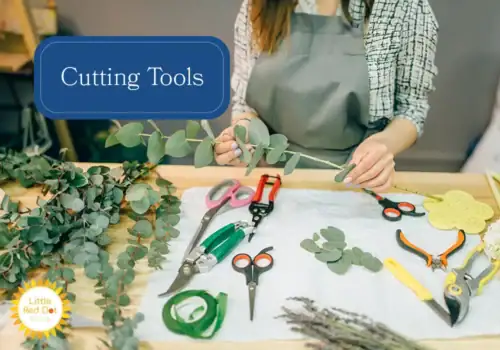
- Cutting Tools: Cutting tools are used in floral design, including floral knives, shears, pruners, and scissors. They are used to cut ribbon, twine, foam, flowers, and foliage.
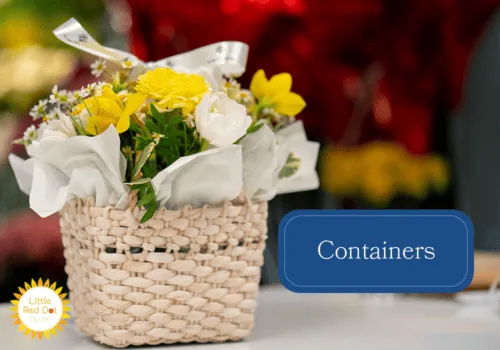
- Containers: Containers come in different forms and sizes, and they are essential for holding arrangements and improving a piece’s appearance.
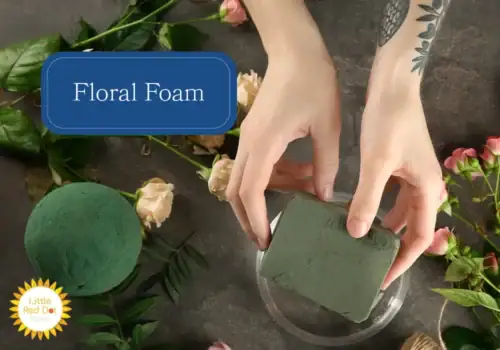
- Floral Foam: Floral foam is a thick substance moulded into different shapes and used to hold moisture and flowers in place.
- Wires and Tapes: Wires and tapes are valuable elements in floral design, performing distinct but similar functions.
- Floral Adhesives: Floral adhesives (cold glue), such as floral tape, pot tape, and hot glue, are tools that are used to secure flowers or cover arrangement mechanics for boutonnieres or corsages
- Conditioning Agents: Conditioning agents in floral design improve flower freshness and vibrancy by increasing water and nutrient absorption and inhibiting bacterial development.
1. Cutting Tools
Cutting Tools help to trim stems, cut foliage, and form flowers. For example, floral shears, pruners, scissors, and knives are used in floral design. Floral designers use sharp cutting tools to prepare and care for flowers efficiently. The tools are intended to make clean, accurate cuts, which are critical for the health and longevity of flowers because they increase water intake and decrease harm to plant tissues. Cutting tools keep each part of the arrangement in top shape and add to the strength and beauty of the design.
2. Containers
Containers, such as vases, bowls, baskets, pots, and more, are the core pieces that hold and display floral designs. They come in different sizes, shapes, materials, and styles. The container matches the theme and appearance of the arrangement and supports the flowers. A well-selected container adds visual appeal and stability to the arrangement while balancing the flowers and foliage. Containers help ensure the flowers have a proper water supply, keeping them fresh and long-lasting.
3. Floral Foam
Floral Foam holds flower stems tightly and provides them with moisture. The foam that absorbs water gives floral designers a firm foundation to build their arrangements, allowing them to place each stem and preserve the structure. Floral foam offers a consistent water supply and securely holds flowers in place, keeping them fresh and colourful. Foam is beneficial for intricate or vertical designs. Floral foam is an indispensable tool for making sophisticated and long-lasting designs because of its ability to adapt.
4. Wires and Tapes
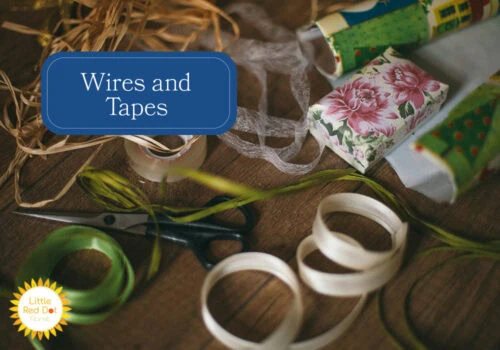
Wires and Tapes are vital tools in flower design, providing different and supportive functions. Wires and tapes work together to create complex designs, hold delicate components in place, and give an arrangement a solid foundation. Using “wires and tapes” is typical for florists.
Delicate flowers and stems are easier to place within an arrangement using floral wires and tapes to support, reinforce, and shape them. Floral wire is available in several sizes, such as thick and thin. Thick wires provide stronger support, and thin wires are used for delicate work. Floral tape is wrapped over wired stems to secure and create a unified, natural appearance. It is covered with a mild adhesive that reacts when stretched, providing a secure hold.
5. Floral Adhesives
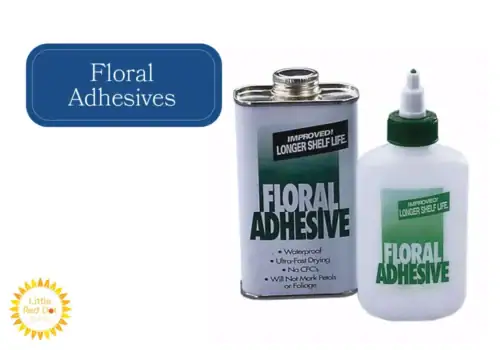
Floral Adhesives, including glue and sticky strips, are used in floral design to attach flowers, foliage, and accessories. Floral adhesives are designed to strengthen bonds while being gentle on fragile flowers or plants. Adhesives are necessary for delicate creations such as corsages, boutonnieres, and wearable flower art, where traditional methods, such as wiring, are complicated or obvious. Floral adhesives ensure stable and durable arrangements, allowing artists to achieve accurate placements and long-lasting artistic compositions.
6. Conditioning Agents
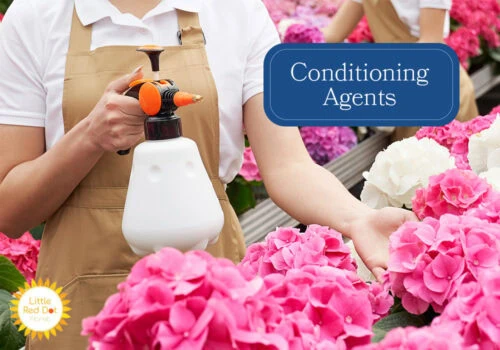
Conditioning Agents are preparations and techniques used in floral design to keep flowers fresh and brilliant longer. Floral designers employ conditioning agents to improve their arrangements’ condition, longevity, and appeal. The substances lessen bacterial growth in the water, enhance flower absorption of nutrients and water, and stop withering. Conditioning agents include nutrients, acidifiers, and biocides, among other things.
How to Become a Floral Designer?
To become a Floral Designer, follow the four steps listed below.
- Study the fundamentals of flower design and plant maintenance. Learn practical skills in professional floristry by taking lessons, volunteering at neighbourhood flower shops, or participating in internships. Study the fundamentals to become a professional.
- Gain proficiency in floral design. Practice is an excellent way to improve abilities because it lets floral designers establish their style and approach. The gain proficiency step results in accurate skills.
- Decide on the preferred working environment and method. Pick a job path, such as retail, wedding agency, floral shops with a long history, or freelancing. Floral designers must decide on the preferred working environment and method to ensure what process needs to be applied.
- Prepare a resume, portfolio, and website. A well-written and goal-oriented curriculum vitae helps individuals land a position in the industry. A website and portfolio highlight the abilities of a self-employed or in-house floral designer. The last step, “prepare a resume, portfolio, and website,” helps floral designers to showcase their skills.
What are the Advantages of being a Floral Designer?
The advantages of being a Floral Designer are listed below.
- Work Alone or for a Business: Floral designers work independently. It gives flexibility and freedom in challenges, including ordering flowers, designing arrangements, and planning events.
- No Need for Higher Education: Floral design programs require students to enrol in business schools, community colleges, and universities. The courses include credentials, degrees, internships, and industry experience. Floral designers and event coordinators promise bigger chances and significant compensation, so they recruit enthusiasts without training.
- Availability of Various Jobs: Floral designers work in different industries, which allows them to be creative and flexible. They are independent decorators, event coordinators, and small to medium-sized floral businesses.
- Ability to Execute Multiple Tasks: Designers use computers to order flowers, arrange bouquets, answer phones, and interact with customers. They need flexibility and expertise.
- Seminars and Classes: Professional organisations and colleges offer continuing education programs and training for designers to acquire new skills and trends. The programs give designers a new perspective on the business and increase their chances of success in their careers.
- Education and Certification: Schools for Business provide training courses to students, allowing them to get certification and higher-paying floral design careers through in-person and online programs.
- Creativity and New Skills: Floral designers enrol in classes to acquire new skills and ideas for special client arrangements. Designers must be enthusiastic about gardening, innovative, and receptive to customers’ tastes. A competent designer is confident, understands the client’s needs, and is open, attentive, and original.
What is the difference between Floral Design and Flower Arrangement?
The difference between Floral Design and Flower Arrangement is the scope and techniques involved. “Flower Arrangement” means arranging flowers in a specific layout within a larger creation, while floral design is a complete art form incorporating many methods and ideas.
Floral design is a deep and artistic profession that entails the imaginative process of planning, designing, and building attractive designs from flowers, leaves, and some botanical components. It incorporates design elements and uses flower foam, wires, and tape. The technique considers aesthetics and artistic expression and involves methods categorised as traditional style and contemporary designs.
The craft or hobby of arranging cut flowers is aesthetically pleasing. Practical and specific flowers are arranged and positioned for displays and mediums (containers) to create an eye-catching result. Flower arrangement emphasises the functional component of placing flowers over the more expansive artistic and conceptual process. The difference between the two includes scope, techniques, complexity, and purpose.
What is the difference between floral design and flower arrangement?
Floral design is the broader art of planning and creating arrangements using flowers, foliage, containers, colour, texture, proportion, and design principles. Flower arrangement usually refers more simply to placing flowers together in a pleasing way. In short, flower arrangement is part of floral design, while floral design includes the full creative and technical process.
What are the basic principles of floral design?
The basic principles of floral design include balance, proportion, scale, rhythm, contrast, harmony, and unity. These principles help florists create arrangements that look stable, natural, and visually pleasing. A well-designed floral arrangement should feel balanced in shape, colour, texture, and size.
What tools are needed for floral design?
Common floral design tools include floral scissors, knives, pruning shears, floral foam, wires, tapes, containers, adhesives, and conditioning agents. These tools help florists cut stems cleanly, support delicate flowers, secure arrangements, and keep blooms fresh for longer.
What flowers are best for floral design beginners?
Beginners can start with hardy and easy-to-arrange flowers such as roses, carnations, chrysanthemums, gerberas, lilies, orchids, and baby’s breath. These flowers are commonly available, versatile, and easier to handle when learning basic bouquet, vase, or centrepiece designs.
Can floral design be used for both celebrations and condolences?
Yes, floral design is used for many occasions, including birthdays, weddings, anniversaries, corporate events, grand openings, home decor, and condolence arrangements. The flower type, colour palette, shape, and style will change depending on the purpose. Bright colours are often used for celebrations, while white, cream, and soft tones are more common for sympathy and funeral flowers.